
Acacia Wood Salt Cellar Wholesale Guide for B2B Buyers
An acacia wood salt cellar looks simple, but bulk buyers usually run into practical questions before they place an order: will the lid slide smoothly, will salt moisture affect the wood, is the surface finish suitable for kitchen use, and will the sample match the 500 or 2,000 pieces shipped later? For an importer or private label kitchenware brand, those details matter more than a clean product photo.
This guide explains how to source an acacia wood salt cellar wholesale order from China with fewer surprises. EcoWoodPlate, operated by Cao County Puchuang Wood Industry Co., Ltd., works as a Chinese wooden products manufacturer for kitchenware, gifts, pet products, packaging items, and other custom wooden products. For small wooden kitchenware such as salt cellars, sugar keepers, spice boxes, and utensil sets, the factory work is not only cutting wood. It includes moisture control, grain selection, lid fit, sanding, food-contact finish discussion, logo testing, sample approval, and export packaging.
The article is written for importers, kitchenware wholesalers, retail chain buyers, Amazon sellers, brand owners, and OEM or ODM customers who need a practical checklist before talking with a wooden products manufacturer China.
What Is an Acacia Wood Salt Cellar?
An acacia wood salt cellar is a small countertop container used for salt, sugar, pepper, dry seasoning, or spice blends. The model shown on ecowoodplate.com uses natural acacia wood, a round body, a lid, and divided storage sections. On the visible kitchen-dining category listing, the product is presented as a natural acacia wood salt cellar and sugar keeper, with MOQ shown as 200 pieces and a regular production range shown as 18-25 days. Buyers should still confirm timing by order, because logo work, packaging, holiday schedules, and mixed-SKU orders can change the final calendar.
For B2B buyers, the product is often sold as a kitchenware retail item, part of a private label wooden kitchenware collection, or a gift set component with spoons, trays, cutting boards, or spice racks. A good RFQ should define both the product and the sales channel.
A Real Procurement Case: 600 Pieces for a Kitchenware Brand
A realistic order looks like this. Marta, a kitchenware brand buyer in Spain, plans a 600-piece test order before a larger autumn campaign. She wants the existing acacia salt cellar body, a small laser logo on the lid, one brown kraft sleeve, and barcode labels for two online sales channels.
Marta: "Can we use the same product but add our logo on the lid?"
Lily: "Yes. Please send the logo in AI, PDF, or SVG format. We will test the logo at about 28 mm wide first, because the lid grain is visible and a very thin line may engrave too lightly."
Marta: "Can the carton hold mixed barcode labels?"
Lily: "Yes, but please separate the quantity by barcode. If 360 pieces use Amazon labels and 240 use retail labels, we will mark the inner cartons separately."
This exchange prevents three common mistakes: unclear logo size, no proof of engraving contrast, and mixed packaging labels that create warehouse problems later.
Material Selection: Why Acacia Works for Salt Cellars
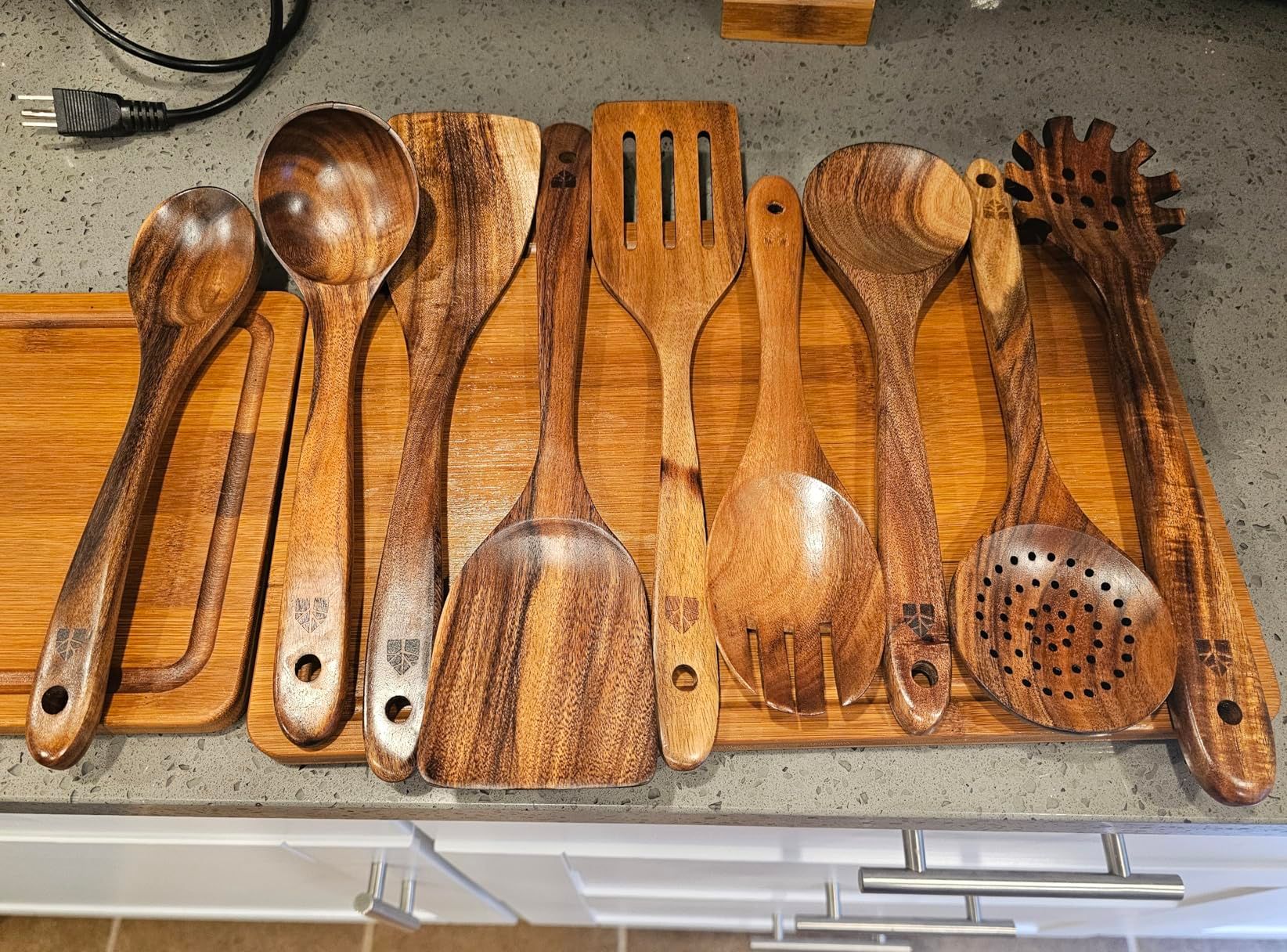
Acacia is popular for wooden kitchenware because it has visible grain, warm color, and reasonable hardness for daily handling. It helps retail products feel less generic, but it creates one sourcing issue: every piece will not look identical. A buyer should approve a reasonable color and grain range, not only one perfect sample.
| Material | Best Use | Buyer Checkpoint |
|---|---|---|
| Acacia | Retail salt cellars, sugar keepers, bowls, trays, utensils | Approve grain range, color variation, and surface oil or coating |
| Bamboo | Clean modern kitchen sets and drawer organizers | Check lamination lines and edge smoothness |
| Beech | Light-color utensils and simple kitchenware | Check stain control and color consistency |
| Rubberwood | Cost-sensitive kitchenware and painted items | Check surface smoothness and odor after finish |
For a salt cellar, buyers should also discuss moisture. Salt can absorb humidity, so the inner compartment surface, lid clearance, and packing dryness should be checked. Ask how finished goods are stored before packing and whether cartons need desiccant for a humid route or season.
Production Flow Buyers Should Understand
Small wooden containers go through several production steps. The factory selects wood boards or blanks, checks moisture condition, cuts or turns the body shape, forms the compartment, machines the lid groove, sands the inner and outer surfaces, applies the agreed finish, tests logo placement, and checks lid movement before packing. If the groove is too tight, buyers receive complaints. If it is too loose, the product may open during shipping.
EcoWoodPlate can discuss CNC cutting, turning, sanding, laser engraving, finish adjustment, and private label packaging. As an OEM wooden products supplier and custom wooden products factory, the useful role is to turn the buyer's idea into repeatable bulk specifications: diameter, height, wall thickness, compartment layout, lid clearance, logo position, finish, individual packing, and carton plan.
Food-Safe Finish and Odor Control
Buyers should not ask only, "Is it food safe?" The better question is, "What finish will touch the stored seasoning, and can we approve the odor and surface feel from the sample?" Wooden kitchenware may use mineral oil, vegetable oil, wax, lacquer, or another food-contact-suitable finishing system, depending on the destination market and use.
For dry salt and spices, the finish should be smooth, low-odor, and easy to wipe clean. Avoid approving bulk production from a photo only. Check smell after opening the bag, lid movement, surface tackiness, inside sanding, and whether seasoning powder catches in rough corners.
Logo, Size, Color, and Packaging Customization
Private label wooden products often need a logo on the lid, bottom, sleeve, or carton label. For an acacia wood salt cellar, lid engraving is common, but test size and contrast first. A 20 mm logo may look discreet; a 45 mm logo may fight with the natural grain. Thin serif letters may not engrave clearly on every piece.
Useful customization details to send in the first RFQ include:
- Target outside diameter and height, or permission to use the existing EcoWoodPlate model.
- Logo file in AI, PDF, SVG, or another clean vector format.
- Logo size, position, and whether engraving or printing is preferred.
- Finish expectation, such as natural oil look, darker tone, or matte surface.
- Individual packaging: poly bag, kraft box, paper sleeve, barcode label, or retail carton.
- Carton quantity and whether inner cartons should be separated by SKU or barcode.
MOQ and Sample Planning
The visible EcoWoodPlate kitchenware listing shows MOQ 200 pieces for the natural acacia wood salt cellar sugar keeper. Treat that as a reference, not a universal promise. A plain stock-style item with neutral packaging is easier to arrange than a custom lid logo, printed sleeve, two barcode versions, and custom carton marks.
A practical first order might be 200-600 pieces for a private label trial, then 1,000-3,000 pieces after sell-through is proven. Ask what changes are possible at the sample stage and what details become fixed once bulk material is prepared.
Quality Control Before Shipment
For wooden salt cellars, QC should include more than outside appearance. Check diameter and height, lid fit, compartment edge smoothness, sanding marks, cracks, odor, logo position, logo clarity, color range, and packaging labels. If the sample uses two seasoning compartments, confirm the divider is clean and stable.
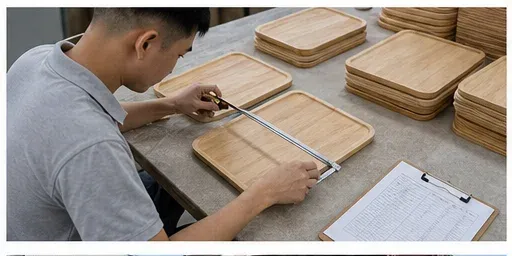
Ask for inspection photos from at least three angles: top with lid open, side with lid closed, and bottom or logo area. For a 600-piece order, request checks from random cartons, not only the first carton on the packing table. Rough inner edges or tight lids are cheaper to correct before final packing.
Export Packaging for Wooden Kitchenware
A salt cellar is small, but it can still be scratched or dented during export. The lid can rub against the body, and loose items inside a carton may hit each other. Confirm individual protection, inner box strength, master carton quantity, carton marks, and whether the packing method suits sea freight, courier, Amazon receiving, or retail distribution.

For e-commerce sellers, a single retail box may need to survive parcel delivery after the export carton is opened. For wholesalers, the priority may be clean carton sorting and fast warehouse receiving. Put these details into the purchase order before production starts.
Buyer Checklist
- Confirm product size, compartment layout, lid type, and material.
- Approve acacia grain and color range, not only one perfect sample.
- Check wood moisture control and storage before packing.
- Confirm food-contact finish expectations and destination market requirements.
- Test logo size, position, and engraving contrast before mass production.
- Define sample approval: physical sample, photos, video, or all three.
- Confirm MOQ, sample cost, bulk lead time, and mixed-SKU packaging rules.
- Request QC photos for lid fit, inner sanding, logo, finish, and carton packing.
- Confirm individual box, sleeve, barcode label, inner carton, and master carton details.
FAQ
How do I source acacia wood salt cellars from China?
Send a clear RFQ with size, material, quantity, logo file, finish requirement, packaging method, destination country, and target delivery date. A reliable wooden kitchenware supplier should confirm the sample process before quoting bulk production.
What should importers check before ordering wooden kitchenware in bulk?
Check wood moisture, grain range, finish odor, sanding smoothness, logo accuracy, sample-to-bulk consistency, carton protection, and labeling. These points are especially important for kitchenware that touches food or seasoning.
Can EcoWoodPlate make private label wooden salt cellars?
EcoWoodPlate can discuss OEM and private label wooden kitchenware, including logo engraving, size adjustment, finish options, paper sleeves, retail boxes, barcode labels, and export carton planning. Final feasibility depends on the design and quantity.
What finish is suitable for a wooden salt cellar?
The finish should be smooth, low-odor, and appropriate for the intended kitchen use and destination market. Buyers should approve the finish from a real sample and confirm whether the product will store dry salt, sugar, pepper, or mixed spices.
How do buyers reduce sample-to-bulk risk?
Use the approved sample as a control standard. Confirm size tolerance, lid movement, logo position, color range, finish, and packaging in writing. Before shipment, request photos or inspection results from random cartons.
What packaging is suitable for wooden salt cellars export?
Common options include poly bag plus inner box, kraft retail box, paper sleeve, barcode label, inner carton, and master carton. The right structure depends on whether the buyer sells through retail, wholesale, Amazon, or kitchenware gift sets.
Working With EcoWoodPlate
EcoWoodPlate at ecowoodplate.com can review acacia wood salt cellar wholesale and custom wooden kitchenware projects for importers, wholesalers, private label buyers, and e-commerce sellers. Send the target quantity, size, logo file, finish expectation, packaging request, and destination market. The team can discuss sample approval, OEM/ODM customization, quality control, and export packaging before you place a bulk order with Cao County Puchuang Wood Industry Co., Ltd.
Need Factory Direct OEM/ODM Pricing?
Send your product, quantity, logo, packaging and destination country. Our factory team will reply with quotation guidance.
Request Factory Quote