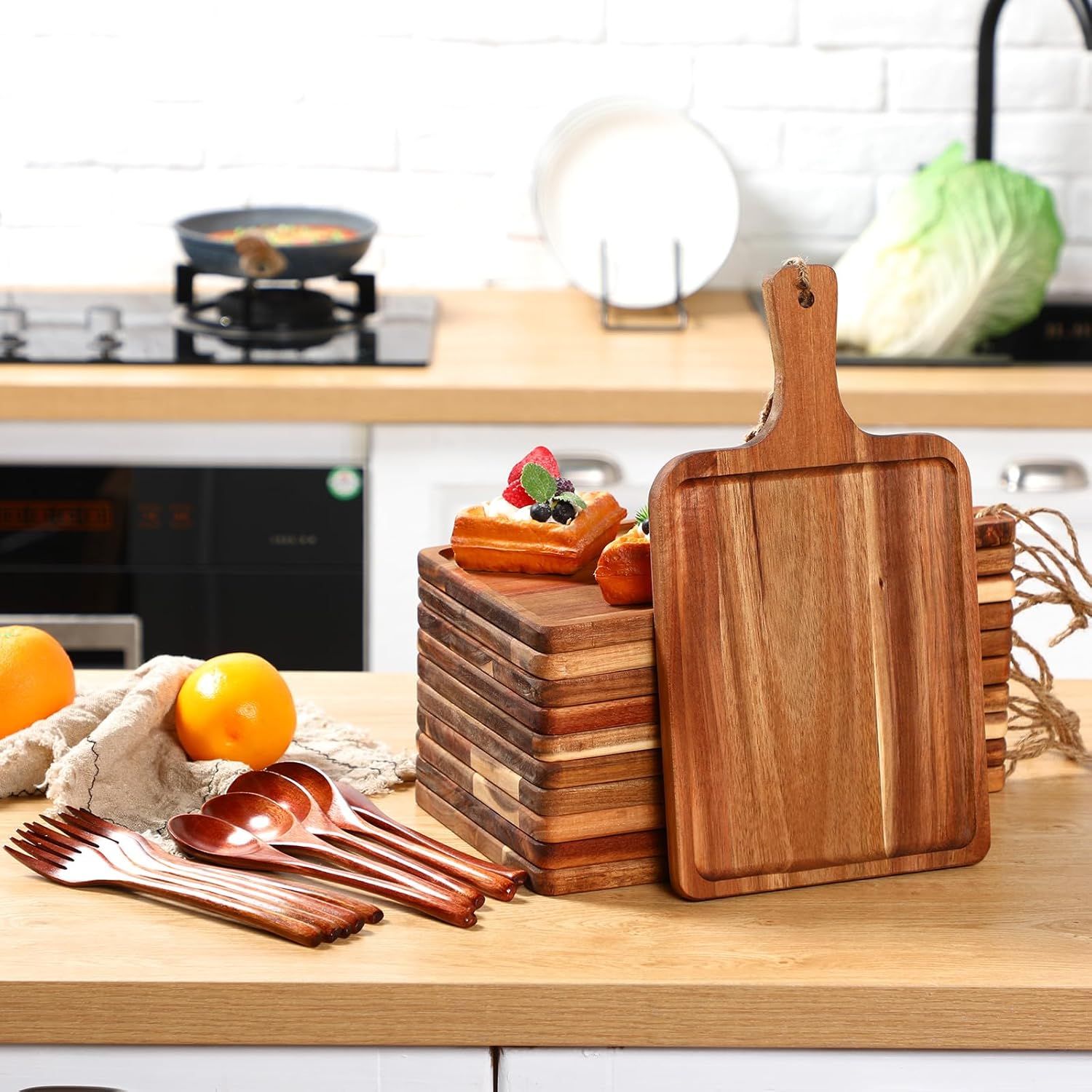
Why Wooden Cutting Boards Are Essential for Professional Kitchens
In professional kitchens around the world, wooden cutting boards remain the preferred choice for chefs and food service professionals. Unlike plastic alternatives that can harbor bacteria in knife scars, natural wood possesses inherent antimicrobial properties that make it a safer and more durable option for commercial food preparation. Studies conducted at the University of Wisconsin have demonstrated that wooden boards can actually reduce bacterial populations over time through natural antimicrobial compounds present in the wood fibers, while plastic boards tend to accumulate bacteria in their cut marks and scratches. This remarkable property of wood makes it an invaluable tool in maintaining food safety standards in restaurants, hotels, and catering operations worldwide. The natural cellulose fibers in wood draw bacteria down into the board where they eventually die, whereas plastic surfaces trap bacteria in cuts where they can survive and multiply.
Understanding Different Wood Types for Cutting Boards
Acacia Wood: The Commercial Kitchen Favorite
Acacia has become increasingly popular in commercial settings due to its exceptional hardness, with a Janka rating of approximately 1,700 lbf. This makes it significantly harder than many traditional cutting board woods like maple (1,450 lbf) or walnut (1,010 lbf). The tight grain pattern resists deep knife marks, and the natural oils help prevent moisture absorption, making it ideal for busy restaurant kitchens where boards see constant use throughout service hours. Acacia trees grow relatively quickly, with harvest cycles of 15-20 years, making them a more sustainable choice compared to slower-growing hardwoods. The wood's natural variation in color, ranging from light golden to deep amber tones, also provides aesthetic appeal for open kitchen environments where cutting boards are visible to diners. Chefs particularly appreciate acacia for its ability to maintain its appearance even after years of heavy commercial use, developing a beautiful patina that actually enhances its character over time.
Teak Wood: Premium Durability for High-End Establishments
Teak offers superior water resistance thanks to its high natural oil content, which can represent up to 5% of the wood's composition. This exceptional water resistance makes teak particularly suitable for outdoor kitchens, bar areas where drinks are prepared, and high-end establishments where product longevity justifies premium investment. While more expensive than other options, teak boards can last decades with proper care, making them a worthwhile investment for luxury hotels, fine dining restaurants, and premium catering operations. The natural oils also provide some self-healing properties, helping the wood recover from minor cuts and scratches over time as the oils rise to the surface and help seal small cuts. Teak's golden brown color deepens beautifully with age, and the wood can be left untreated outdoors without deteriorating, unlike most other hardwoods.
Maple and Walnut: Traditional Choices
Hard maple remains a classic choice with excellent durability and a neutral, light color that shows cleanliness clearly. Many chefs prefer maple because it shows when the board needs cleaning, helping maintain hygiene standards in busy kitchen environments. The tight, even grain provides a smooth cutting surface that is gentle on knife edges while still offering excellent durability. Walnut offers darker, richer tones that many chefs prefer for presentation purposes, particularly when serving charcuterie or cheese courses directly on the board. Both species are readily available from sustainable sources in North America and offer excellent value for mid-range establishments. Maple's density makes it particularly resistant to deep cuts, while walnut's slightly softer nature can be easier on delicate knife blades.
Size and Thickness Considerations for Commercial Use
Selecting the right size cutting board is crucial for kitchen efficiency and ergonomics. For restaurant operations, consider these sizing guidelines carefully based on your specific workflow and available counter space:
- Small boards (8x10 inches): Perfect for prep work with vegetables, herbs, and smaller items. These are ideal for prep stations where space is limited or for specific tasks like mincing garlic or chopping garnishes.
- Medium boards (12x18 inches): Serve as versatile all-purpose options for general kitchen use. This size accommodates most cutting tasks while remaining manageable for staff to handle and clean efficiently.
- Large boards (18x24 inches): Ideal for high-volume prep and meat processing. Essential for busy kitchens processing significant quantities of ingredients. Provides ample workspace for breaking down proteins or processing large vegetables.
- Extra large boards (24x36 inches): Best for bulk prep stations and catering operations where large-scale preparation is routine. These substantial boards can handle entire cases of produce or large cuts of meat.
Thickness matters significantly for longevity and stability. Boards under 1.5 inches may warp more easily, especially when exposed to moisture repeatedly throughout the day in busy commercial environments. Boards measuring 2 inches or more provide superior stability, resist warping even with heavy daily use, and can be resurfaced multiple times to extend their useful life. For commercial kitchens, we recommend minimum 2-inch thickness for boards that will see heavy daily use. Thicker boards also stay in place better during vigorous cutting, improving both safety and efficiency in the kitchen.
Grain Orientation Options Explained
Edge Grain Boards: The Standard Choice
The most common and affordable option, edge grain boards feature wood with the grain running perpendicular to the cutting surface. These boards offer good durability, are easier on knife edges than end grain options, and provide excellent value for budget-conscious operations. Edge grain boards are the workhorses of most commercial kitchens because they provide a good balance of performance and cost. The elongated grain pattern is visible on the surface, giving these boards their characteristic striped appearance. Edge grain construction allows for longer boards that might not be practical with end grain construction due to stability considerations.
End Grain Boards: The Premium Option
End grain boards represent the premium choice where wood fibers run vertically. These boards are self-healing, as knife edges separate rather than cut the wood fibers. When the knife is lifted, the fibers close back together, making the board appear to heal itself. This property means end grain boards show less wear over time and are significantly gentler on knife blades, reducing sharpening frequency and extending knife life considerably. Professional chefs often prefer end grain boards for this reason alone, as quality knives represent a significant investment. They are significantly more expensive due to the complex construction process but offer unmatched longevity and performance. The checkerboard pattern created by the end grain construction also provides a distinctive, professional appearance.
Why Source Wholesale Cutting Boards from EcoWoodPlate
As a B2B manufacturer specializing in wooden products, we offer significant advantages for wholesale buyers seeking reliable supply and consistent quality:
- Competitive factory-direct pricing: Our MOQ starts at just 100 pieces, making professional-grade boards accessible to businesses of all sizes from small restaurants to large hotel chains
- Extensive customization options: Laser engraving for branding and logos, custom sizes and shapes to fit specific needs, various edge treatments including juice grooves and handle cutouts
- Quality assurance: All products manufactured under ISO 9001 certified processes ensuring consistent quality across every order
- Flexible production: 15-20 day turnaround for standard orders, with expedited options available for urgent needs
- Global shipping experience: We handle international documentation, proper packaging for long-distance shipping, and logistics coordination to destinations worldwide
Care and Maintenance for Commercial Longevity
Proper maintenance extends cutting board life significantly in commercial settings, protecting your investment and ensuring food safety:
- Cleaning: Clean immediately after use with warm, soapy water - never soak or use dishwashers as this causes wood to swell and potentially crack
- Drying: Dry thoroughly standing upright to allow air circulation around all surfaces
- Oiling: Apply food-grade mineral oil weekly for boards seeing heavy daily use to prevent drying and cracking
- Resurfacing: Sand and recondition annually, or more frequently for heavily used boards, to maintain a smooth, hygienic surface
- Storage: Store in well-ventilated areas away from heat sources and direct sunlight which can cause warping
Contact our team today to discuss your wholesale cutting board requirements. We provide free samples for qualified buyers and offer volume discounts for larger orders. Our experienced sales team can help you select the right specifications for your specific needs and budget.