Wooden Cake Stands Wholesale: How to Specify Size, Stability, and Retail Packaging
A wooden cake stand can look right in a product photo and still fail the first time a bakery places a cake on it. The top may be too small for the cake board, the pedestal may rock on a flat counter, or the stand may arrive with a rubbed edge because its parts moved inside the box. Wholesale buyers should approve the dimensions, the loaded sample and the packed sample as one product—not as three separate conversations.
This is a sourcing guide for importers, homeware brands, bakery-supply wholesalers, caterers and retail buyers ordering wooden cake stands in quantity. It covers single-tier pedestal stands and tiered dessert displays. A stand intended for plated cupcakes at a buffet is not automatically suitable for a heavy celebration cake. Tell the supplier which use you are buying for before asking for a quote.
First, define what the stand must hold
Start with the widest cake board or serving plate that will sit on the stand, not just the diameter of the cake itself. The board must have a supported, level area. Write down whether the stand will carry a whole cake, individual desserts or a decorative display only. For a tiered stand, state the intended items on each level and how much hand clearance the user needs between tiers. Do not turn a styling photograph into a load rating.
One useful sample brief might read: “For a 24 cm cake board, show the usable flat top area, the outer rim diameter, pedestal height and foot diameter on one drawing.” Those numbers are an illustrative buyer brief, not a claimed EcoWoodPlate SKU size or a universal design rule. The important part is that the factory and buyer measure the same features.
Specify four dimensions, not one
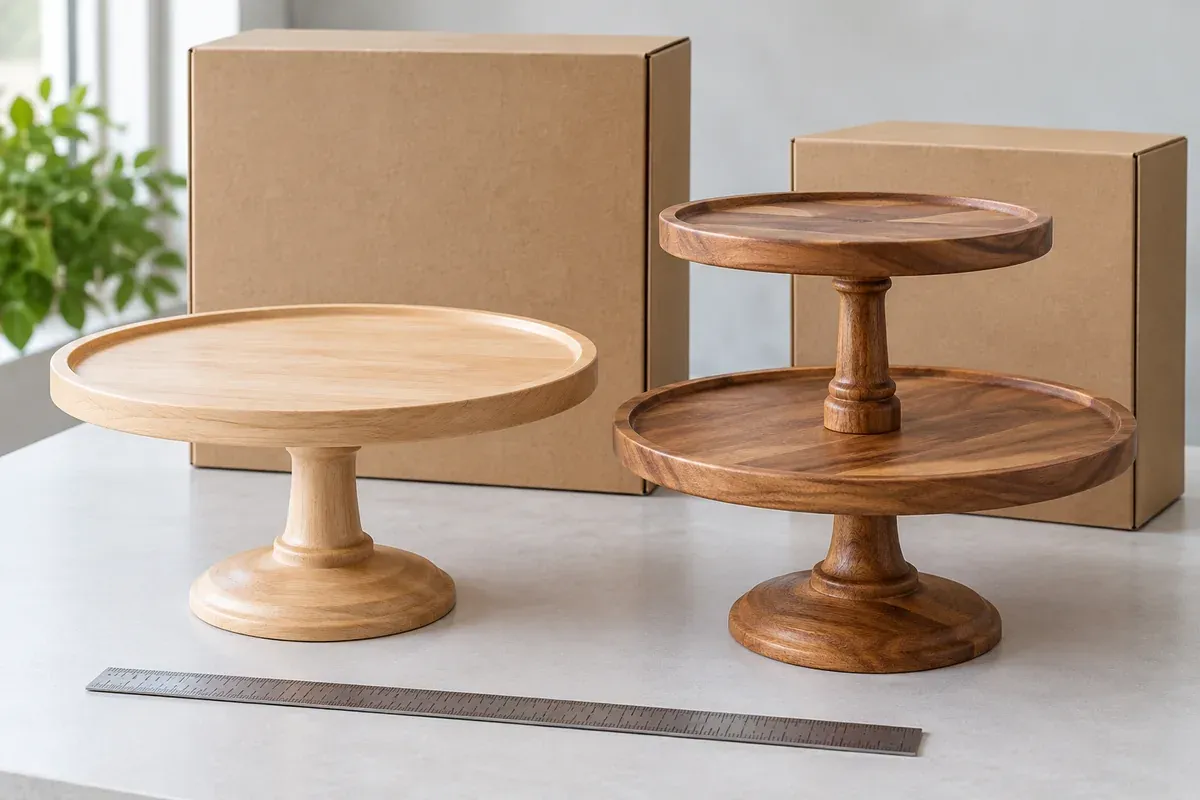
“30 cm cake stand” could mean the total outside diameter, the flat serving area inside a raised rim, or the footprint on the counter. That ambiguity causes avoidable sample revisions. A purchase specification should separate the usable top diameter, overall top diameter, assembled height and base-foot diameter. Add the top thickness and clearance beneath a tier where relevant. For a knock-down design, record the dimensions again after assembly and after packing.
If the product will sit beneath a glass dome, include the dome's inside diameter and height. If the retailer has a shelf-depth limit, give the allowable closed retail-box dimensions. A larger top can improve display space but can also change leverage at the pedestal joint; size and stability have to be checked together.

Choose material for shape and finish, not just color
Beech gives a light, fairly even appearance; acacia tends to show stronger grain and color variation. Bamboo is another option for some display designs, though its laminated construction reads differently from a turned solid-wood pedestal. None is automatically “better.” Choose around the design, the surface finish, the target retail look and the variation your customer will accept.
For a broad round top, ask how the blank is built and conditioned before final shaping. Wood movement can show up as a cupped tray or a rocking foot after the parts leave the factory. Incoming material inspection, moisture checks, grain selection and a finished-sample reference help define what is acceptable. If the stand will touch unpackaged food, tell the supplier the destination market and intended use so the finish and any food-contact documentation can be reviewed for that project; do not assume every decorative finish is suitable for direct food contact.
Test stability with the real use case
Set the assembled sample on a known flat surface. Press gently at several positions around the top and watch the foot and joint, not just the tray. Rotate the stand and repeat. Then place the buyer's representative load on the center and near the outer serving area, using a procedure agreed in the sample specification. If a buyer needs a numerical load claim for a listing or a retailer file, it should come from a documented test on the approved design—not from a competitor's product description.
Look for three different problems. A rocking foot points to uneven underside machining or pads. A top that tilts under off-center pressure points to pedestal or joint geometry. A top that is visibly cupped points to material or process control. A stand can pass one check and fail another. The sample sign-off should say what was tested, how it was supported and what the buyer accepted.
For a two-tier stand, check the lower-to-upper connection and whether each tier sits level after the hardware is tightened by an ordinary user. A factory technician can often make a sample look perfect with extra adjustment. Retail instructions should make the same result practical for the customer.
What happens between timber and finished stand
A sensible production sequence starts with checking incoming wood or panel material, cutting or turning the top and pedestal components, sanding edges and contact surfaces, dry-fitting the joint, applying the approved finish, then checking the assembled sample after the finish has cured. The exact sequence differs by construction. Ask where the factory measures top diameter, joint fit and foot flatness, and where it catches finish defects before boxing.
For an OEM order, provide a drawing or a physical reference and specify logo method, size, color tone, surface treatment, hardware appearance and packaging. Laser engraving can work on a wooden base or underside, but the engraving proof should be checked on the selected wood species and finish. Color can vary across grain, so approve a reasonable reference range rather than expecting every unit to photograph identically. EcoWoodPlate's OEM/ODM service page is the right starting point for a custom specification.
Build the retail box around the product
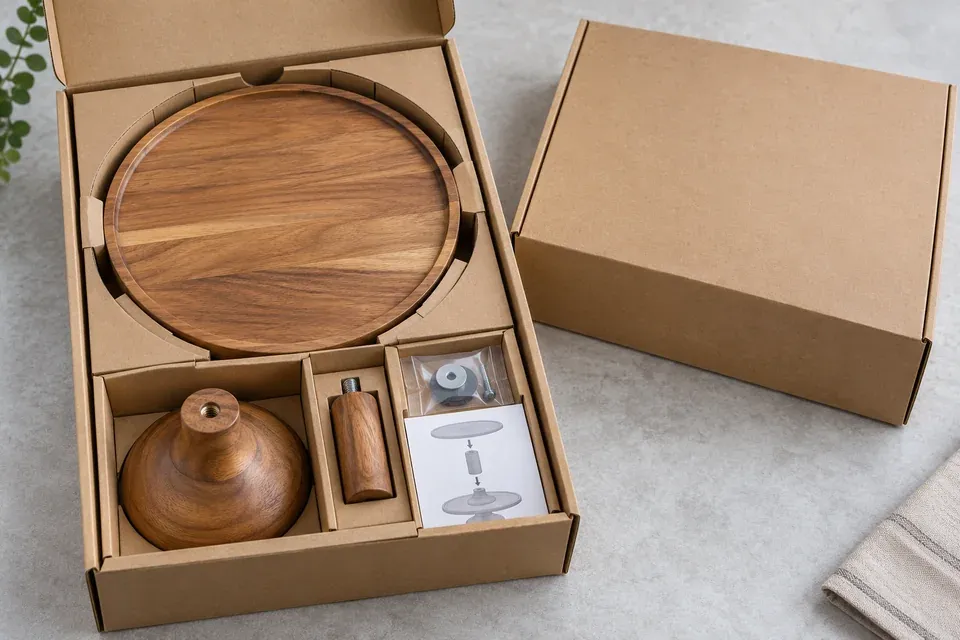
A pedestal stand has two vulnerable areas: the finished rim and the joint. If the item ships assembled, the retail insert must stop the top from bearing against the carton wall or pressing down on the pedestal during handling. If it ships flat, the tray, pedestal, foot and fittings each need a defined location. A loose screw can scratch the top; a loose pedestal can break through the inner box.
Approve a fully packed sample. Open it in the sequence a customer will use. Check the parts count, the instruction sheet, barcode position, carton closure and whether any surface rubs against another finished surface. Measure both the retail box and the export carton from that packed sample. If the seller uses parcel fulfillment, ask for a separate packed-route check; a shelf box alone may not protect the rim in individual shipping.
For a second, independent packaging checklist, see WoodHomeware's guide to wooden-product export packaging. It covers the questions a buyer should settle about inserts, labels and cartons. WoodHomeware is a separate company; its guide is a reference, not an EcoWoodPlate product specification or partnership claim.
Sample, MOQ and bulk-order consistency
Request a product sample first, then a retail-packed sample with the exact insert, hardware bag, printed box and instruction revision. MOQ can change with the timber, turned parts, custom color, engraving and printed carton; ask for a quote based on the complete specification rather than a generic “cake stand” listing. If you are comparing two sizes, treat each as its own SKU for drawings, barcode and carton count.
Before bulk production, freeze the approved drawing and finish range. During production, compare top diameter, foot flatness, joint fit, sanding, finish appearance and package contents against that reference. A final carton inspection should confirm the SKU and outer-carton quantity as well as the stand itself. Our broader wooden display stand OEM guide covers adjacent display products, but this cake-stand brief deserves its own load and pack checks.
Wholesale buyer's sign-off sheet
| Decision | Record before order |
|---|---|
| Use | Whole cake, cupcake display or decorative use; direct food contact or plate/board only. |
| Size | Usable top, outer rim, assembled height, foot diameter, tier clearance and packed dimensions. |
| Material | Wood species or bamboo construction, grain/color range and approved finish. |
| Stability | Flat-surface check, agreed representative load, joint fit and written acceptance result. |
| Branding | Logo proof, color, label, barcode and instruction revision. |
| Packing | Retail insert, complete parts count, export-carton layout and packed-sample approval. |
FAQ
How large should a wooden cake stand be?
Specify the usable flat area against the cake board or serving plate, then check the foot diameter, height and shelf or box limits. The outer rim diameter alone does not tell you whether the cake board is supported.
How do I check if a wooden cake stand is stable?
Check the assembled sample on a flat surface, rotate it, inspect the joint and test it with the intended load in agreed positions. Ask for a recorded result before using any numerical load claim.
Is a flat-pack stand better for wholesale?
It may reduce box height, but it adds fittings, assembly instructions and a customer-assembly check. Compare total packed size and the opening experience, not just the carton dimension.
Can the stand be private labelled?
Logo engraving, finish tone, size and retail print can be discussed with the supplier. Approve the mark on the actual material and keep artwork, SKU and packed sample under the same revision.
What should I send with an RFQ?
Send the target use, cake-board size, top and foot dimensions, material preference, finish, expected quantity, logo file, sales channel and packaging requirements. If you have a reference product, include photos of its underside and joint—not only the display side.
EcoWoodPlate, operated by Cao County Puchuang Wood Industry Co., Ltd., works with overseas buyers on custom wooden products. If you are looking for a Chinese wooden products manufacturer or an OEM wooden products supplier for wooden cake stands wholesale, send your drawing or use brief through ecowoodplate.com/contact. We can discuss the sample, construction and retail packaging together. That conversation is more useful than asking a custom wooden products factory to quote from a single attractive photo.
Need Factory Direct OEM/ODM Pricing?
Send your product, quantity, logo, packaging and destination country. Our factory team will reply with quotation guidance.
Request Factory Quote