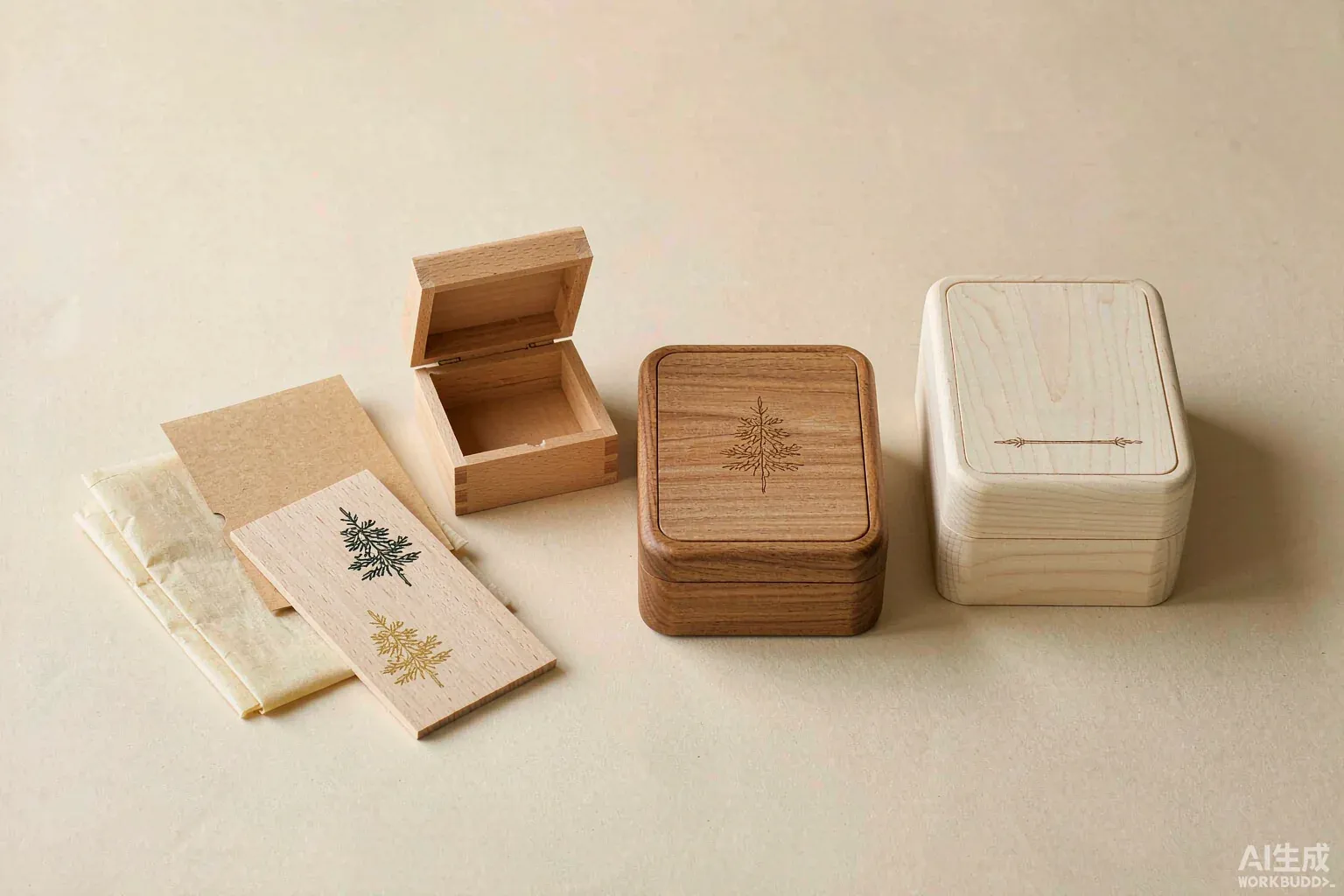
AI-generated sample-review concept, not EcoWoodPlate product photography. Actual box styles, decoration results and available dimensions require sample confirmation.
Sourcing wooden Christmas gift boxes wholesale is a calendar problem before it is a design problem. The box has one selling season, one retail reset date, and usually no chance to reorder. Fix the date it must be on a shelf, then work backward through artwork approval, sampling, production, and ocean transit.
A shipment that lands three weeks late in November has no full-price market.
Plan backward from the shelf date
Holiday programs fail on dates more often than on workmanship. A factory can build an excellent box in November that no longer has anywhere to go.
Ask for a written schedule with four dates: artwork freeze, pre-production sample approval, production completion, and handover to your forwarder. Place them next to commitments you already made — store reset windows, distribution center appointments, and the day your warehouse stops receiving holiday freight.
Between factory handover and your dock sit booking, ocean transit, port dwell, clearance, and inland trucking. None are controlled by the supplier, so a production date is not a delivery date.
Published figures size the conversation rather than replace it. EcoWoodPlate's listing for the stackable wooden gift box set shows a 200-piece MOQ and a 15–20 day production lead time. Those numbers describe that configuration; a new size, a foil logo, and a six-cavity insert change both.
This exchange is illustrative, not an EcoWoodPlate order record. The second question matters because buyers often quote a retail date as a delivery date, which quietly removes two or three weeks of buffer.
Decide which job the box is doing
Three different products get called a Christmas gift box, and they are specified differently.
| Role | What changes in the specification | What to check on the sample |
|---|---|---|
| Gift-wrap substitute | Lid fit, hinge or magnet, ribbon groove, clean interior | Whether the lid sits flush once packed, and whether the interior looks finished |
| Retail shelf unit | Label area, hangtag hole, stackability, sleeve or window | Whether it still reads under store lighting, with a flat label area for a barcode |
| Transit protection | Wall and base thickness, corner joints, cavity fit, carton plan | Whether contents shift when tilted, and how the box behaves in its carton |
Many programs want all three from one box, which costs wall thickness, insert volume, and freight weight. Set the priority before the first quotation.
Holiday decoration behaves differently on wood
Gold foil on deep red is a paper-packaging reflex. On wood, the same artwork behaves differently, and the method decides both the look and the failure mode.
- Laser engraving darkens with depth and shows grain through the mark. Fine lines can close up in soft wood, and uneven depth reads as patchy tone.
- Screen or UV printing allows a controlled Christmas red or green but needs a flat, sealed surface. Adhesion on oiled or waxed wood is a common failure.
- Hot foil stamping delivers the metallic gold that reads as holiday gifting, but depends on pressure, temperature, and a surface that accepts foil. On a heavily grained lid it can break up along the grain instead of forming a clean edge.
Two artwork rules prevent most reprints: keep the seasonal mark large enough to survive the grain, and test the thinnest stroke on the actual substrate rather than on a rendering. Keep the physical test board as the bulk reference.
Personalization turns a stock box into variable-data work: version control, sorting, and a rule for who absorbs a misspelled run.
This is a representative decoration discussion, not a customer record. The finish decision and the decoration decision are the same decision; approving them separately is how a sample and a bulk order end up looking unrelated.
Build the insert around the contents
An insert designed from a drawing almost always needs adjustment once a real product sits in it. Mixed gift sets are the hardest case: a candle, a jar, and a folded textile have three densities and three tolerances.
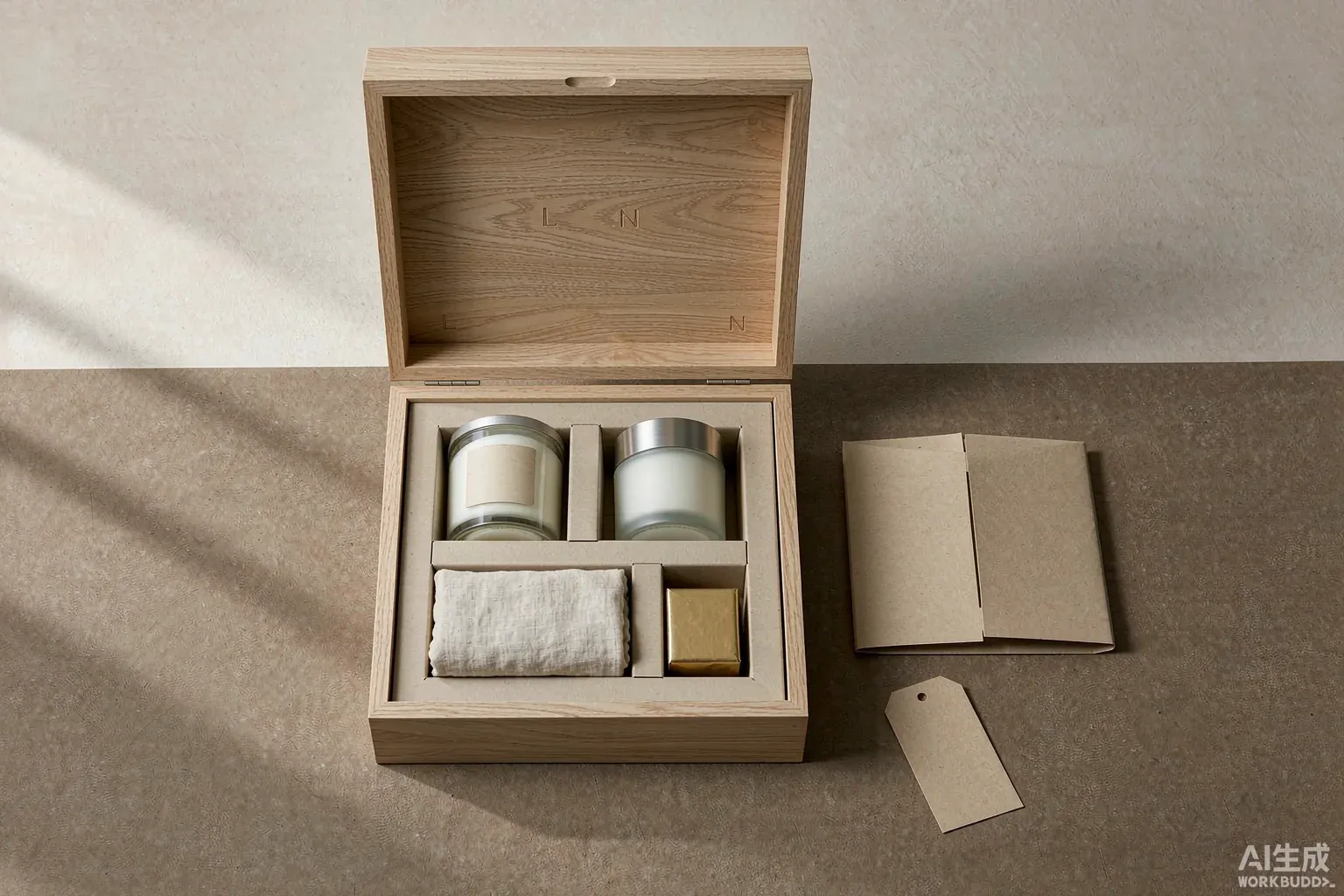
Give the factory the filled weight of each item, not only its dimensions, and say whether the box will be hand-carried or shipped individually. A heavier set pushes the base and corner joints, and changes how many units fit in a carton.
Odor is the quiet holiday defect. Candles, tea, chocolate, and cosmetics pick up smells, and a freshly finished box is not odor-neutral. Test with real contents sealed in the real packaging for several days.
If the box holds unwrapped food, the question is no longer only about the box. A sealed jar is packaging around packaging; direct contact with an oiled wood surface involves the coating and adhesive too. Ask for the specific finish and any documentation, and route the decision through your own compliance partner. This is a screening checklist, not a legal determination.
The distinction between sealed and loose food is the one buyers most often skip when a gift set looks simple on a mood board.
Screen the U.S. requirements that apply
A wooden gift box is an imported article, so the compliance questions concern the box and its contents rather than the holiday. Bring this list to your broker or compliance team; it is not a substitute for their determination.
- Country of origin marking. Under 19 CFR Part 134, articles of foreign origin — or their containers — must carry the English country of origin for the ultimate purchaser, with limited exceptions. Containers meant for reuse are treated differently from usual containers, and a box that is itself the product differs from one that only carries it. Confirm the plan rather than assuming a lid engraving satisfies it.
- Composite wood and formaldehyde. Hardwood plywood, MDF, and particleboard fall under 40 CFR Part 770, including when built into a finished good. Coverage is not universal — several structural and exterior panel types sit outside scope — so ask which panel class the factory will use.
- Plant material declarations. A Lacey Act declaration depends on the article containing plant material, an APHIS-listed HTS code, a formal entry, and the entry type. Those conditions do not apply to every shipment; see APHIS requirements.
- Children's products. A box marketed as a child's gift may be assessed as a children's product, a different path from general-use packaging. Most seasonal decorations are general-use items, but marketing and age language affect classification; see CPSC guidance.
- Environmental claims. “Eco-friendly,” “sustainable,” and “biodegradable” are general claims that the FTC Green Guides treat cautiously; unqualified general environmental benefit claims are discouraged.
- ISPM 15. The standard covers solid wood packaging used with cargo — crates, pallets, dunnage — not a finished gift box. It does apply to the pallet your cartons travel on.
Retail details that cause chargebacks
Presentation sells the box; labeling gets it paid for. Most retailer deductions on a holiday program come from details that were nobody's explicit job.
Confirm barcode size and placement against the retailer's vendor guide, and check that the surface is flat enough for a reliable scan. Decide where the price ticket goes and whether you need a no-price version for direct-to-consumer orders. State pack quantity, acceptable gross weight, carton mark format, and whether mixed-SKU cartons are allowed.
Ask what happens to tooling if the retailer reorders in early December. That answer belongs in the quotation, not in a December phone call.
Inspect against a signed golden sample
In a year-round program, a small defect rate is an inconvenience. In a single-season program the same rate is a permanent loss, because no next run absorbs it.
Seal and sign a golden sample with the final finish, decoration, insert, and retail packaging, then inspect against it: lid gap and warp after curing, magnet alignment, foil or print rub at the edges, glue bloom on lining, and corner condition after carton packing. Ask for pre-shipment photos at the same angle and light as the approval photos.
Frequently asked questions
What is the MOQ for custom wooden Christmas gift boxes?
It depends on structure, decoration, and retail packaging. EcoWoodPlate's listings for the wooden gift box with magnetic lid and the stackable set both show 200 pieces — a reference, not a quote. A new size, foil logo, or custom insert can change the effective minimum.
How early should I place a Christmas gift box order?
Work backward from the date the box must be available, not from Christmas. Sample approval, artwork freeze, production, and transit each take time you should confirm in writing. If the retail date is fixed, the sample date protects it.
Do wooden gift boxes need ISPM 15 treatment?
Not as finished gift boxes. ISPM 15 applies to solid wood packaging used with cargo — crates, pallets, dunnage. The pallet under your cartons does fall in scope.
Can a wooden gift box hold food gifts?
It depends on direct contact. A sealed jar differs from loose chocolate touching an oiled surface. Ask for the specific finish and available documentation, and have your compliance partner review it before the design is frozen.
For the wider packaging development process — materials, insert engineering, hardware, and general OEM workflow — the custom wooden gift packaging boxes OEM guide covers the groundwork this article assumes. If the program also includes hanging ornaments, the wooden Christmas ornaments sourcing guide addresses hanging construction and ornament-specific checks.
Planning a holiday gift box program for your brand? EcoWoodPlate can review your box dimensions, contents, decoration method, insert idea, and retail packaging requirements before sampling. Send the specifications and target delivery window through the contact page to start a project discussion.
Need Factory Direct OEM/ODM Pricing?
Send your product, quantity, logo, packaging and destination country. Our factory team will reply with quotation guidance.
Request Factory Quote