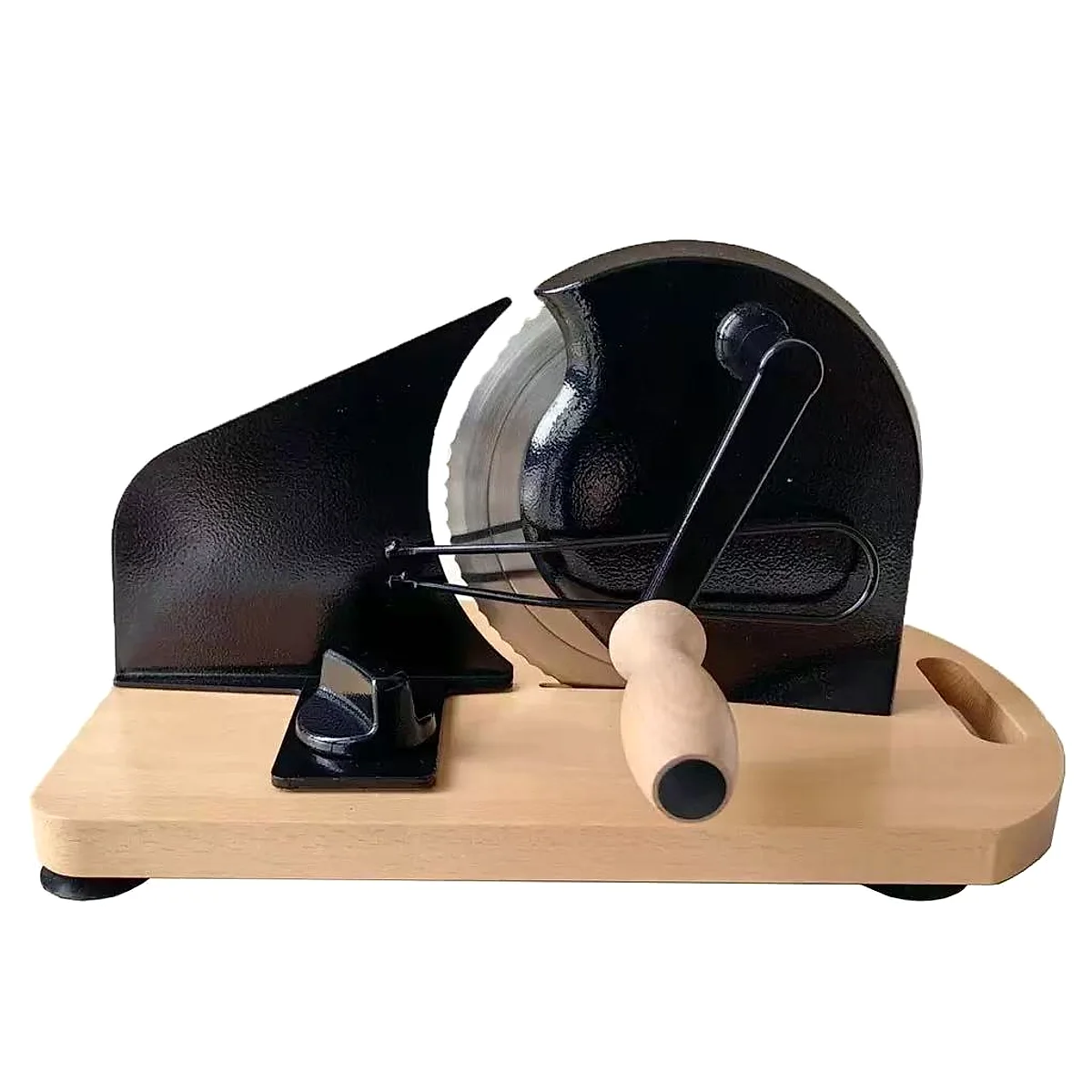
10 Things to Check Before Buying Wooden Bread Slicers in Bulk
A bulk bread-slicer order becomes expensive when the first complete carton is opened at the destination warehouse—not when the quote is accepted. A product photo may show pale wood and a hand crank. It does not tell a buyer whether the intended retail channel, component set, sample, logo, package and re-order process all describe the same item.
Buyers who buy wooden bread slicers in bulk need a purchase brief that can survive the handover from sales team to factory, from sample room to assembly line, and from export carton to retail shelf. The ten checks below are written for importers, wholesalers, kitchenware brands and e-commerce teams buying a manual product—not a powered bakery machine.
For a current product reference, see EcoWoodPlate’s manual wooden bread slicer with hand crank. It is a starting point for a discussion, not a substitute for an approved drawing, sample or project quotation.
1. Decide what the bulk order is supposed to do
“Bulk” is not a product specification. A gift distributor, an online seller and a specialty kitchen retailer can buy the same basic slicer for different reasons: shelf presentation, inbound handling or a complete retail set.
Write down the sales channel, destination market, target customer, loaf formats, retail presentation and whether the first purchase is a trial order or a repeat program. This avoids treating retail, e-commerce and distributor packing as the same request.
2. Name the product format and its boundaries
A slotted wooden knife guide and a hand-crank slicer are not interchangeable. The first relies on the user’s knife; the second adds a carriage, crank, rotating blade, guard, guide and more packing considerations. Describe the exact format in the RFQ, then state what it is not. A countertop manual slicer should not be marketed or specified as a commercial-throughput bakery machine.
List the loaf shapes that will appear in instructions or product imagery. A cooled sandwich loaf, a dense rectangular loaf and a round sourdough can behave differently in the same carriage. Use the sourdough bread-slicer guide when loaf shape is central to the brief.
3. Ask for a component list before comparing prices
Do not compare two quotations headed “wooden bread slicer” and assume they include the same thing. Ask for the wooden base and upright, carriage, blade and guard arrangement, crank, shaft or pivot, guide, stop, feet, fasteners, loose parts, instruction insert and each packaging layer. Where a part is removable, specify whether it is attached, bagged or nested in the insert.
That list makes a price conversation more honest. It also reveals the production handovers: wood preparation, machining, sanding, assembly, logo treatment, packing and final check. A good-looking body alone does not show whether the hardware interface or retail set is controlled.
4. Check the wood and wood-to-metal interfaces
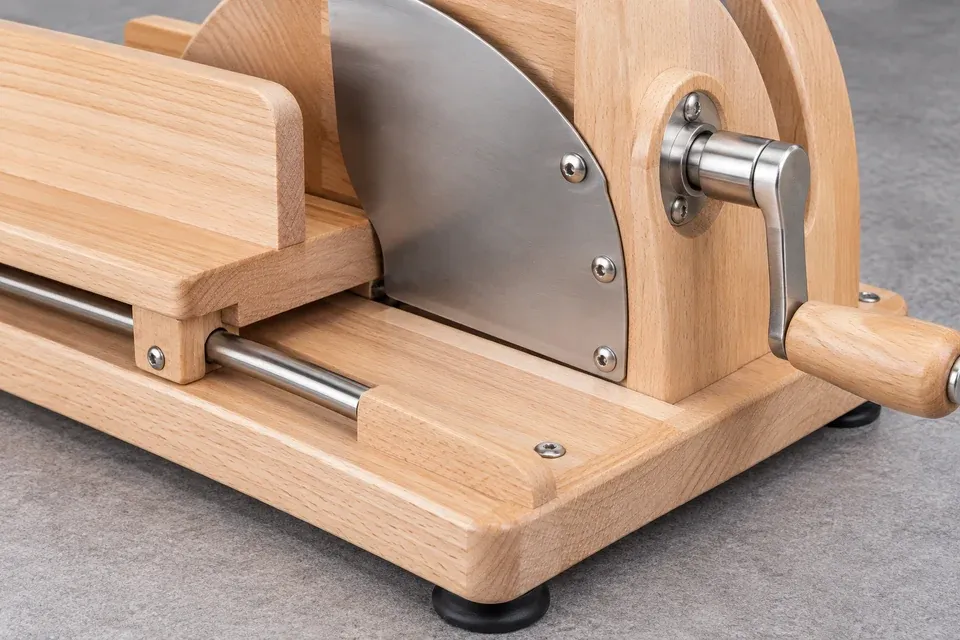
Natural grain and colour variation do not automatically mean poor quality. The buyer should instead agree what is acceptable: the visible wood range, sanding level, edge treatment, finish appearance, knots or marks that affect the intended look, and any surfaces that must remain consistent with a brand sample.
Then inspect where wood meets metal: screw locations, shaft holes, guard fixings, crank connection, carriage rails and feet. Ask how wood is checked before machining and how parts are screened before assembly. A Chinese wooden products manufacturer should turn those questions into an inspection sequence, not a generic promise.
5. Make the working sample prove the intended use
Approve more than appearance. Name the bread formats, condition of the loaf, guide position and method for a working sample check. Observe whether the base remains stable, the carriage follows its intended path, the crank attaches securely, the guide leaves reasonable clearance and the guard remains in the approved position. Keep photos and observations with the sample record.
Do not treat a marked setting as a universal guarantee of finished slice thickness. Loaf shape, crust, blade condition and operating method all influence the result. The useful question is whether the agreed sample behaves consistently with the brief. Buyers who need a deeper physical-inspection plan can use the wooden bread slicer quality-check guide.
6. Confirm MOQ and quotation assumptions, not only the headline number
The current EcoWoodPlate k005 listing shows a 200-piece MOQ. Treat it as a discussion point, not a standing promise. Wood, mechanism, finish, logo method, insert and carton printing can change the project minimum. Ask which assumptions support the quote and which change needs a new sample.
Compare offers against the same checklist. One price may include the crank and an unprinted carton; another may assume a logo, colour box or different inner protection. Ask what is included, what is buyer-supplied and what happens when artwork or components change.
7. Approve branding on the real product and pack
Logo engraving, tone, instruction card and packaging artwork should be seen in the materials a customer will receive. Wood grain can change the contrast of an engraved mark, even when the digital artwork is identical. Approve the logo position, orientation, scale and acceptable appearance on the actual wood surface. Keep the final artwork revision with the purchase order.
Separate a branding change from a mechanism change. A revised carton or logo can be reviewed as a branding sample. A revised crank, blade, guard, shaft, stop or carriage needs a functional review too. EcoWoodPlate’s OEM/ODM service can help buyers map logo, size, finish and packaging decisions before bulk materials are released.
8. Turn the approved sample into a bulk QC plan
“Same as sample” only works when the sample is accompanied by enough references. Keep the approved product photos, drawing revision, component list, logo proof, packing layout and functional observations together. Agree which items are checked during assembly, which are sampled before packing and what evidence is sent before shipment release.
| Bulk-order check | What belongs in the buyer brief | Useful evidence |
|---|---|---|
| Product identity | Model, component list, wood/finish range and drawing revision | Signed sample set and part photos |
| Function | Named loaf check, carriage path, guide and crank observations | Agreed sample-test record |
| Brand and pack | Logo proof, artwork revision, part count, insert and carton layout | Final pack-out sample and photos |
For a wider supplier and factory-role review, see what B2B buyers should check from a wooden bread slicer manufacturer. An OEM wooden products supplier should welcome a clear reference set because it reduces subjective discussions during the bulk run.
9. Check the packed unit before approving the master carton
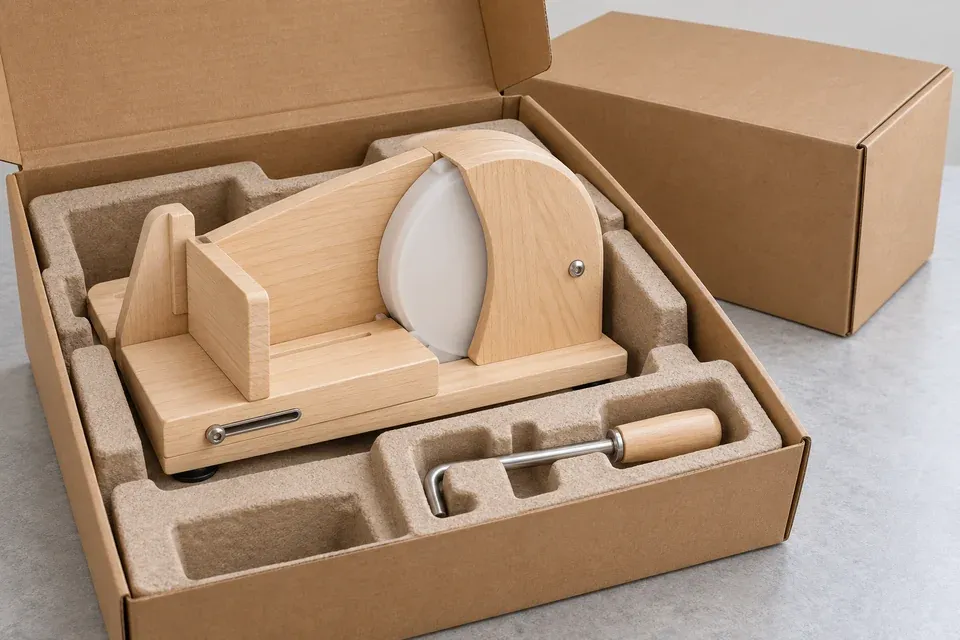
Wood and metal can damage each other in transit when a crank, hardware pack or blade area moves inside a box. Request a packed sample with the intended retail box and inner protection. Check that the mechanism is immobilised as designed, sharp areas are protected, loose parts have a defined location, the unpacking sequence is understandable and carton markings match the order documents.
Then discuss the master carton, quantity per carton, warehouse handling, pallet needs and shipping route. Do not use “strong packing” as the whole specification. The wooden-product export packaging guide gives importers a practical way to define product separation, accessory control and carton evidence.
10. Build change control into the next order
A first order is often where a private-label team discovers details it wants to revise. Record who can approve a change, what must be checked again, and whether existing packaging still protects the modified product. A new finish, size, blade arrangement, crank shape or guide geometry can affect assembly, functional checking, inserts and carton fit.
A controlled reference set lets a buyer request the same product—or a deliberate revision—without relying on memory or a message history.
An illustrative bulk-order conversation
This Mara–Chen exchange is illustrative, not a customer testimonial.
Mara, a kitchenware buyer: “We are considering 360 units for independent stores and our online channel. I need the product sample, the logo proof on pale wood, a complete retail pack and the master-carton layout before the PO is released.”
Chen, a project coordinator: “Please send the loaf types, logo file, artwork revision, expected accessory count and delivery route. We can build those into the sample approval list. If the crank or guide changes after approval, the product and packing sample should be reviewed again.”
The 360-unit figure is only an example. It is not an MOQ, price, capacity statement or prior customer order. The useful part is that sales channel, functional sample and pack-out are discussed together.
Buyer checklist before the purchase order
- State the channel, intended user, loaf formats and manual-product boundaries.
- Compare quotes against one component, finish and packaging list.
- Approve a physical working sample, not only product images.
- Approve logo and instructions on final materials and retain the revision.
- Agree the sample-to-bulk QC evidence and change-control process.
- Check a packed unit and the master-carton plan before shipment release.
FAQ
What should I request before buying wooden bread slicers in bulk?
Request a product brief, component list, sample, functional-check method, logo proof where relevant, packing sample, quotation assumptions and inspection/release plan. The exact mix depends on the model and sales channel.
Is a catalog MOQ the final MOQ for my project?
No. The current 200-piece figure on the referenced EcoWoodPlate product page is a starting point. Wood, mechanism, branding, printing and packaging can change the final project requirement. Confirm the live quotation before committing.
Can I use one sample for branding, function and packaging?
Sometimes, but the approval evidence should still be separated. A visual logo proof does not replace a function check, and a bench sample does not prove the final retail pack or master carton.
How should I compare wooden bread slicer suppliers?
Compare like for like: product format, components, material/finish range, sample scope, logo method, inner protection, carton plan, inspection point and delivery terms.
Can EcoWoodPlate support OEM wooden bread slicers?
EcoWoodPlate, operated by Cao County Puchuang Wood Industry Co., Ltd., works as a Chinese wooden products manufacturer, OEM wooden products supplier and custom wooden products factory. Share the product brief, quantity, logo and packaging needs so the sample scope can be discussed before a bulk order.
Make the bulk order easy to inspect
A useful buying decision defines the product, evidence and packing clearly enough for buyer, factory and inspector to use the same record. Browse the wider Kitchen & Dining range, review ecowoodplate.com, or contact EcoWoodPlate with your expected quantity, channel, product requirements and pack-out brief. That gives a wooden products manufacturer China a practical starting point for the next conversation.
Need Factory Direct OEM/ODM Pricing?
Send your product, quantity, logo, packaging and destination country. Our factory team will reply with quotation guidance.
Request Factory Quote