Wooden Product Export Packaging Guide for Importers
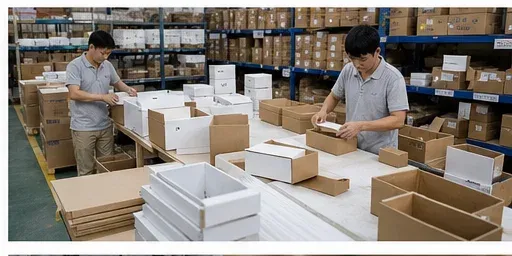
Wooden product export packaging should protect the item, preserve the approved sample appearance, keep hardware and labels organized, and survive warehouse handling before the buyer ever sees the product. For importers, wholesalers, retail chain buyers, Amazon sellers, and private label brands, packaging is not the last small detail. It is part of quality control.
EcoWoodPlate, operated by Cao County Puchuang Wood Industry Co., Ltd., works through ecowoodplate.com as a Chinese wooden products manufacturer for B2B buyers. As an OEM wooden products supplier and custom wooden products factory, the company often sees the same problem: a buyer approves the product sample but does not approve the packed sample. Then the bulk order reaches the warehouse with rubbed corners, loose hardware, mixed labels, or cartons that are too weak for the shipping route.
This guide explains how importers should discuss export packaging with a wooden products manufacturer China partner before mass production. It applies to wooden gift boxes, trays, kitchenware, laser engraved wooden products, pet products, home decor, wooden bread slicers, and other private label wooden products.
What Export Packaging Must Do
Good packaging has four jobs. First, it keeps the wooden surface from rubbing against itself, hardware, or carton walls. Second, it controls movement inside the box. Third, it separates accessories, screws, instruction sheets, labels, and barcode stickers. Fourth, it gives the importer a repeatable packing standard that can be checked before shipment.
Wood is sensitive to pressure marks, moisture change, corner impact, and surface abrasion. A pine gift box may dent if two boxes touch directly. A painted wooden display stand may show rub marks if the finish is packed too soon. A wooden kitchenware set may arrive with small scratches if pieces are not separated. A buyer should not simply ask for "safe packing." Ask what touches the product, how empty space is filled, and how the carton is closed.
Who Needs a Packaging Plan?
Importers need a packaging plan when the order will move through several hands: factory, truck, export warehouse, sea or air freight, destination warehouse, courier, retail shelf, or e-commerce fulfillment center. Retail buyers need clean inner boxes and label consistency. E-commerce sellers need carton strength and barcode placement. Purchasing managers need a clear checklist for inspection.
A simple rule works well: if the product has a visible surface, a logo, a hinge, a sharp corner, a loose accessory, or a retail label, the packaging deserves its own approval step.
A Realistic Buyer Case: 600 Wooden Trays for a Retail Test
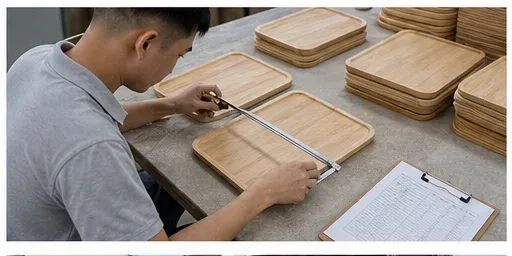
A European home goods buyer, "Marta," planned a 600-piece trial order of laser engraved wooden trays. The product sample looked acceptable: size tolerance within 1 mm, logo centered, surface smooth after sanding, and color range approved. The first packing proposal, however, used one thin poly bag per tray and 20 pieces per export carton. The buyer asked a practical question: "What happens to the engraved face during a 35-day sea shipment and courier delivery to stores?"
The factory packaging engineer answered honestly: "If the trays press against each other, the logo area may be safe, but corners can rub. We should add paper separation between visible faces and reduce movement inside the carton." They revised the packing with surface protection and a tighter inner arrangement. The carton count changed, but the risk changed too.
The useful point is not that every order needs expensive packaging. A packed sample should be tested and photographed before bulk packing. A 600-piece trial can create fewer problems than a 6,000-piece order if the packaging standard is locked early.
Materials: Choose Protection by Product Risk
Different wooden products need different packaging materials. A thin paper wrap may work for unfinished craft pieces but not for painted gift packaging boxes. PE bags reduce dust but do not stop corner pressure. EPE foam can protect edges and corners. Honeycomb paper and corrugated pads can separate surfaces. Small hardware bags keep screws away from finished wood. Inner boxes help retail presentation and reduce rubbing, but they add cost and carton volume.
For food-contact wooden kitchenware, the packaging should keep the product clean and dry after the food-safe coating has cured. For a wooden bread slicer wholesale order, the guide slots and movable parts need protection from pressure. For a wooden gift box supplier project, hinges, latches, inner inserts, and logo positions need separate checks. For wooden pet products, odor, edge finish, assembly parts, and printed instruction sheets may matter more than decorative wrapping.
Production Flow: Packaging Starts Before Packing Day
Export packaging should be discussed during sample development, not after mass production. At EcoWoodPlate, a typical custom order moves through material inspection, cutting or CNC shaping, sanding, assembly, surface treatment, logo engraving or printing, inspection, and packing. Packaging decisions connect with each step.
If the product has a coating, packing too early can trap odor or mark the surface. If the product has a laser engraved logo, the logo location should stay away from friction points. If a product is assembled with screws, those screws should not sit loose in the same bag as the wooden part. If the wood moisture content is still unstable, sealed packaging can make the problem harder to see until the goods arrive.
OEM and Private Label Packaging Details to Confirm
For OEM/ODM projects, buyers should confirm more than the product itself. Packaging customization can include printed color boxes, kraft boxes, hang tags, barcode labels, instruction sheets, warning labels, carton marks, FBA-style carton information, and pallet labels. Logo placement can appear on the wooden product, inner box, outer carton, or all three.
Ask for artwork files and a print proof before mass printing. A common mistake is approving the wooden sample but leaving carton marks or barcode labels until the final week. Another mistake is assuming the supplier knows the destination warehouse rule. If the buyer needs a specific carton weight limit, carton size, barcode format, country-of-origin wording, or retail packaging style, it should be included in the RFQ and sample approval record.
Sample, MOQ, and Packed Sample Approval
MOQ changes when packaging becomes custom. A product may have a lower MOQ with neutral packaging, while printed boxes, special inserts, or private label cartons may need a higher quantity because printing suppliers and carton factories have their own setup requirements. Instead of asking only "What is your MOQ?", ask two questions: "What is the MOQ for the product with neutral export packing?" and "What changes if we need private label packaging?"
The packed sample should include the real inner protection, label position, instruction sheet, accessory bag, carton mark, and carton layout where possible. For larger bulk orders, buyers can request photos of the first packed carton before all goods are packed. This small step catches many mistakes: missing labels, wrong carton mark, loose hardware, incorrect quantity per carton, or a retail box that is too tight.
Quality Control Points Before Shipment
A wooden product packaging QC checklist should include product surface, logo position, dimensions, color range, moisture or odor concern, accessory count, inner protection, carton quantity, gross weight, carton mark, and drop-risk areas. The buyer does not need to inspect every unit, but the inspection method should be clear.
For example, an inspector can open random cartons, check 2 to 5 pieces per selected carton, compare the product against the approved sample, confirm label placement, and shake the packed carton lightly to feel whether goods move too much. For fragile wooden gift boxes, hinge and latch checks should be added. For flat-pack pet or home decor products, screw bags and instruction sheets should be counted. For laser engraved wooden products, the inspection should include logo position and contrast.
Export Cartons and Shipping Route
The same product may need different packing for different routes. A full-container order can often use more predictable carton handling than mixed courier delivery. E-commerce parcels need stronger individual protection because the parcel may be turned, dropped, or stacked under heavier goods. Retail warehouse deliveries may require strict carton labels and consistent carton weight.
Buyers should tell the factory whether the goods ship by sea, air, courier, FBA-style warehouse, retailer DC, or mixed distribution. A bulk wooden products supplier can then discuss carton size, inner boxes, palletization, carton marks, and whether extra edge protection is needed. Do not wait until after production to mention warehouse rules.

Buyer Packaging Checklist
| Checkpoint | What to Confirm | Why It Matters |
|---|---|---|
| Product surface | Bag, paper, foam, or divider touches the finished surface correctly | Prevents scratches and rub marks |
| Logo area | Engraving or printing does not face pressure points | Protects brand appearance |
| Accessories | Screws, hinges, cards, and labels are packed separately | Prevents missing parts and surface damage |
| Carton quantity | Pieces per inner box and export carton are written down | Avoids warehouse count disputes |
| Carton mark | SKU, quantity, destination label, and handling marks are approved | Supports import and retail operations |
| Inspection | Random cartons are opened before shipment | Catches packing errors before export |
FAQ
What packaging is suitable for wooden products export?
Suitable packaging depends on the product. Most export wooden products need surface separation, corner protection where needed, accessory bags, clear carton marks, and cartons sized to reduce movement during transport.
How can importers prevent wooden products from shipping damage?
Approve a packed sample, check carton quantity and inner protection, keep hardware away from finished surfaces, and inspect random packed cartons before shipment.
Should private label packaging be approved with the product sample?
Yes. Private label packaging should be approved before bulk production or at least before mass packing. Barcode labels, carton marks, instruction sheets, and retail boxes can all create delays if handled too late.
Does custom packaging change MOQ?
It can. Neutral export packing may allow a smaller trial order, while printed boxes, custom inserts, or special labels may need a higher MOQ because packaging suppliers have setup requirements.
How does EcoWoodPlate handle packaging discussions?
EcoWoodPlate reviews product structure, finish, logo position, order quantity, destination market, and shipping method before recommending inner protection, carton layout, labels, and inspection points.
Working With EcoWoodPlate
If you are comparing a Chinese wooden products manufacturer, an OEM wooden products supplier, or a custom wooden products factory, send EcoWoodPlate your product drawing, logo file, packaging requirement, target quantity, and destination route. Cao County Puchuang Wood Industry Co., Ltd. can help review the product and packaging together so the approved sample is closer to the bulk order your warehouse will actually receive.
Buyers can also review EcoWoodPlate's factory capability, custom OEM/ODM service, wooden gift and craft products, wooden kitchenware products, inquiry page, custom wooden products sample approval guide, and moisture control guide for wooden product importers.
Need Factory Direct OEM/ODM Pricing?
Send your product, quantity, logo, packaging and destination country. Our factory team will reply with quotation guidance.
Request Factory Quote