
How to Verify a Chinese Wooden Products Manufacturer
To verify a Chinese wooden products manufacturer, buyers should check whether the supplier can explain its factory process, sample control, material inspection, logo testing, packaging method, and pre-shipment QC in measurable terms. A catalog is useful, but it is not proof. A real factory should be able to show how raw wood becomes repeatable bulk goods.
EcoWoodPlate, operated by Cao County Puchuang Wood Industry Co., Ltd., works through ecowoodplate.com as a Chinese wooden products manufacturer for overseas B2B buyers. For importers, wholesalers, brand owners, retail buyers, Amazon sellers, and private label customers, the point is not only finding a low quote. The point is reducing the chance that samples look fine while the bulk order has rough sanding, unstable moisture, weak cartons, or inconsistent logo engraving.

What Verification Means for Wooden Products
Wooden products are different from many plastic or metal items because every batch has natural variation. Grain direction, color range, knots, density, and moisture condition affect the final look. A supplier who cannot discuss these details may still trade wooden goods, but may not control production deeply enough for OEM wooden products.
Verification should answer five questions. Does the supplier understand the product? Can it produce or coordinate the process directly? Can it keep sample and bulk order consistency? Can it explain defects before they happen? Can it pack for the destination market? These questions apply to private label wooden products, laser engraved wooden products, wooden gift boxes, wooden pet products, wooden trays, bread slicers, cutting boards, and broader custom wooden products.
Start With a Process-Based RFQ
A weak RFQ says: "Please quote wooden box with logo." A useful RFQ says: "Please quote a pine wooden gift box, 220 x 160 x 80 mm, hinged lid, laser engraved logo 45 mm wide, clear coating, inner paper insert, individual white box, export carton for 12 pieces, and sample approval before bulk order." The second version gives the factory something to verify.
A Real Verification Case From EcoWoodPlate's Public Case Studies
One public EcoWoodPlate case involved a Japanese trading company sourcing wooden trays with strict laser engraving requirements. The project required very fine engraving control, visible defect control, wood grain matching, and packaging aligned with Japanese labeling expectations. During sample review, a small engraving deviation around 0.1 mm was enough to trigger another adjustment because the buyer wanted a tighter appearance standard.
The useful lesson is not that every order needs the same tolerance. It is that serious buyers define what matters before mass production. A realistic buyer-factory discussion may sound like this:
Buyer Naomi: "Our retail client will reject trays if the logo shifts or the grain looks mixed in one set. Can you control this before packing?"
Factory engineer Liu: "We should approve a logo test on the same wood, record the position, and sort the visible surface before engraving. For bulk goods, QC can compare random pieces against the approved sample and the engraving position record."
Naomi: "Please show the carton label and inner protection too. The buyer checks packaging before checking the tray."
Liu: "Then we will include sample carton photos and a packing checklist, not only product photos."
Check the Material Control, Not Only the Wood Name
Material choice should match the product and market. Pine is workable for light home decor and packaging. Beech and rubberwood can give a denser surface for some kitchenware or gift items. Acacia has a stronger grain pattern and is often used where appearance matters. Bamboo board works for some kitchen and organizer products, but edge finish and glue line appearance must be checked. Plywood can be practical for flat panels if edge sealing and surface veneer are acceptable.
Ask how the supplier checks incoming wood: moisture condition, warping, cracks, large knots, color difference, board thickness, and surface defects. For export wooden products, moisture control matters because dry destination climates can expose weak material selection through cracking or warping. A supplier does not need to promise impossible zero variation. It should explain the acceptable range and how it sorts visible surfaces.
Verify Production Steps
A real custom wooden products factory should be able to walk through production in order: raw material inspection, cutting, CNC or shaping, drilling, sanding, assembly, surface treatment, logo engraving or printing, final inspection, and packing. The exact process changes by product. A wooden gift box needs hinge and lid fit. A wooden pet product needs rounded edges and stable structure. A wooden bread slicer needs guide slot alignment. A laser engraved wooden product needs logo contrast testing.
If the supplier cannot explain the step where your main risk appears, slow down. For example, if logo consistency matters, ask for two or three logo tests before sample approval. If carton damage is the problem, ask for packed-unit photos and carton strength discussion. If odor matters for wooden pet products or kitchenware, ask about coating, drying time, and packing timing.
Sample Approval Should Become a Control Record
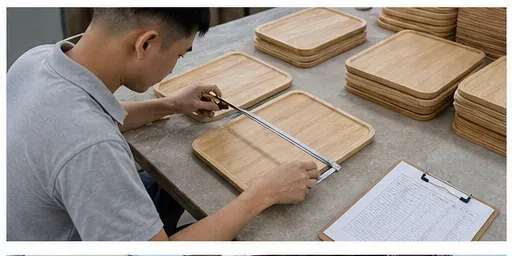
Many forum complaints about overseas sourcing come from one pattern: the sample was approved visually, but the buyer did not lock the measurable details. For wooden products, a sample approval record should include size, material, thickness, color range, surface smoothness, logo size and position, edge radius, finish, odor, hardware, packaging, carton marks, and packed weight when relevant.
Before placing a bulk order, ask for a short sample report. It can be simple: 8 to 12 photos, key measurements, logo close-up, surface close-up, packing photo, and any difference from the original drawing. If the sample is revised, label it clearly as version 2 or version 3. This prevents a common mistake where the buyer approves one photo but the factory team produces according to an older specification.
MOQ and Sample Fees: What Is Reasonable?
A practical buyer can ask: "What is the lowest trial quantity using existing structure, and what changes if we need private label packaging?" This separates product MOQ from packaging MOQ. It also helps a buyer plan a test order without forcing the factory into a specification that cannot be repeated economically.
Logo, Color, Finish, and Packaging Verification
Logo approval should use the same material and finish planned for bulk production. Laser engraving can appear darker on one wood and softer on another. Printed logos need adhesion checks. Burn depth, position, and contrast should be approved with a ruler or marked drawing, not only a beauty photo.
Color and surface treatment also need realistic limits. Wood grain will not look identical piece by piece. Instead of asking for "same color always," buyers should approve an acceptable color range. For food-contact wooden kitchenware, discuss the coating requirement and destination market before sampling. For gift boxes, pet products, and home decor, check odor, drying, rub marks, and packing timing.
Factory Verification Checklist for Importers
| Area | What to Ask | Good Signal |
|---|---|---|
| Factory role | Which steps are done in-house or controlled by the factory? | Clear process answer, not only "we can supply" |
| Material | How are wood type, moisture, defects, and color range checked? | Sorting and inspection details |
| Sample | What measurements and photos are locked before bulk order? | Versioned sample record |
| Logo | How is engraving or printing tested before mass production? | Same-material logo test |
| QC | What is inspected before packing and before shipment? | Product-specific checklist |
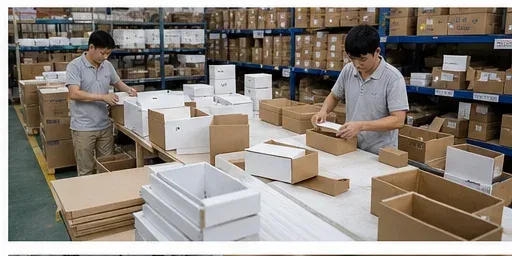
| Packaging | How are corners, surfaces, hardware, and cartons protected? | Packed-unit photos and carton plan |
Internal Links for Further Review
Buyers can review EcoWoodPlate's factory capability, custom OEM/ODM service, case studies, wooden gift and craft products, wooden pet products, and inquiry page. For related sourcing topics, see custom wooden products sample approval and moisture control for wooden products.
FAQ
How do I verify a Chinese wooden products manufacturer?
Ask for process details, sample records, material inspection points, logo testing, QC checklist, packaging photos, and export packing logic. A real manufacturer should explain how the product is made and checked.
How can I tell if a supplier is a factory or a trading company?
Ask which production steps are in-house, request process photos, compare answers across material, sanding, finishing, logo, and packing questions, and check whether the supplier can discuss defects in practical terms.
What should importers check before placing a bulk wooden product order?
Confirm sample version, dimensions, material, moisture risk, surface finish, logo position, color range, packaging, carton marks, inspection method, and shipment timing before mass production starts.
How do I control quality for OEM wooden products?
Use a written sample approval record, define measurable checkpoints, request production photos at key stages, and inspect random bulk units against the approved sample before shipment.
What packaging is suitable for wooden products export?
Use inner protection that prevents rubbing, corner and edge protection where needed, fixed hardware bags, suitable retail or inner boxes, and export cartons planned around product weight and shipping route.
Working With EcoWoodPlate
If you need an OEM wooden products supplier, custom wooden products factory, or wooden products manufacturer China partner, EcoWoodPlate can review your drawing, reference sample, logo file, packaging request, target quantity, and destination market. Cao County Puchuang Wood Industry Co., Ltd. can help turn unclear sourcing questions into a practical sample, QC, and packaging plan before you place a larger order.
Need Factory Direct OEM/ODM Pricing?
Send your product, quantity, logo, packaging and destination country. Our factory team will reply with quotation guidance.
Request Factory Quote