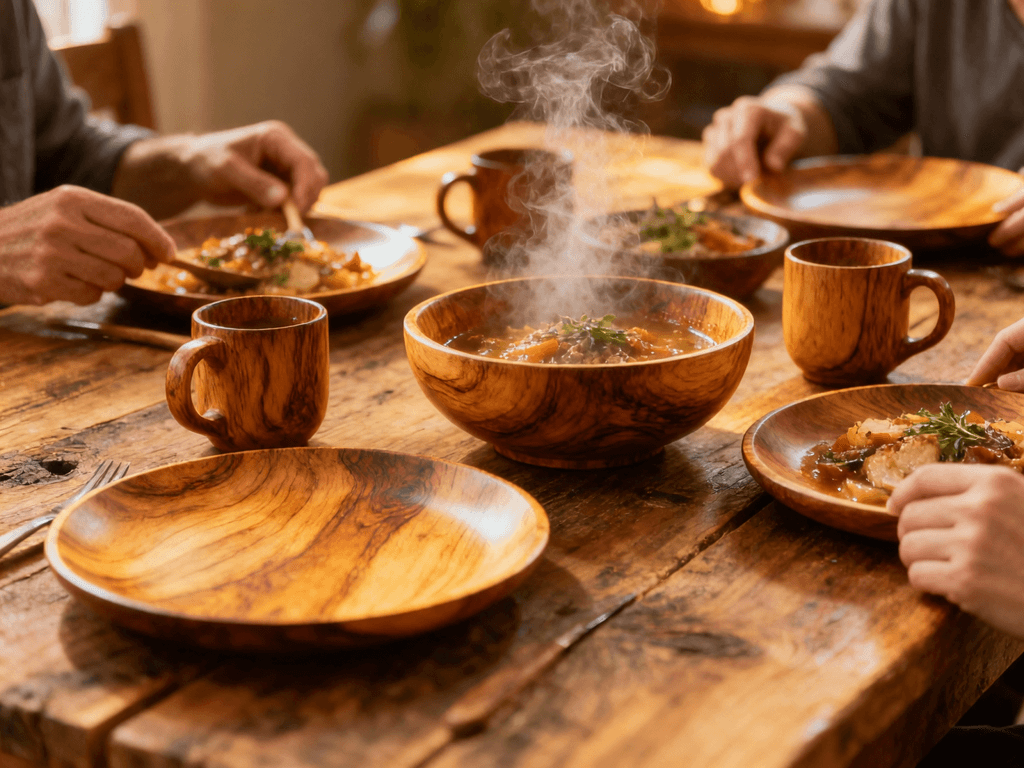
Wooden dinnerware sets can work well for importers, gift brands, restaurant suppliers, and e-commerce sellers when the buyer controls three points early: material stability, food-contact finish, and packaging strength. A nice-looking sample is not enough. For a bulk order, the plates, bowls, cups, logo position, color tone, surface feel, and export cartons all need to be confirmed before production starts.
EcoWoodPlate, operated by Cao County Puchuang Wood Industry Co., Ltd., supplies wooden kitchenware and custom wooden products for overseas B2B buyers through ecowoodplate.com. As a Chinese wooden products manufacturer and OEM wooden products supplier, our role is not only to make the shape. A reliable custom wooden products factory should help the buyer turn a product idea into a repeatable retail item with clear material, finish, packing, and inspection standards.
What Is a Wooden Dinnerware Set for B2B Buyers?
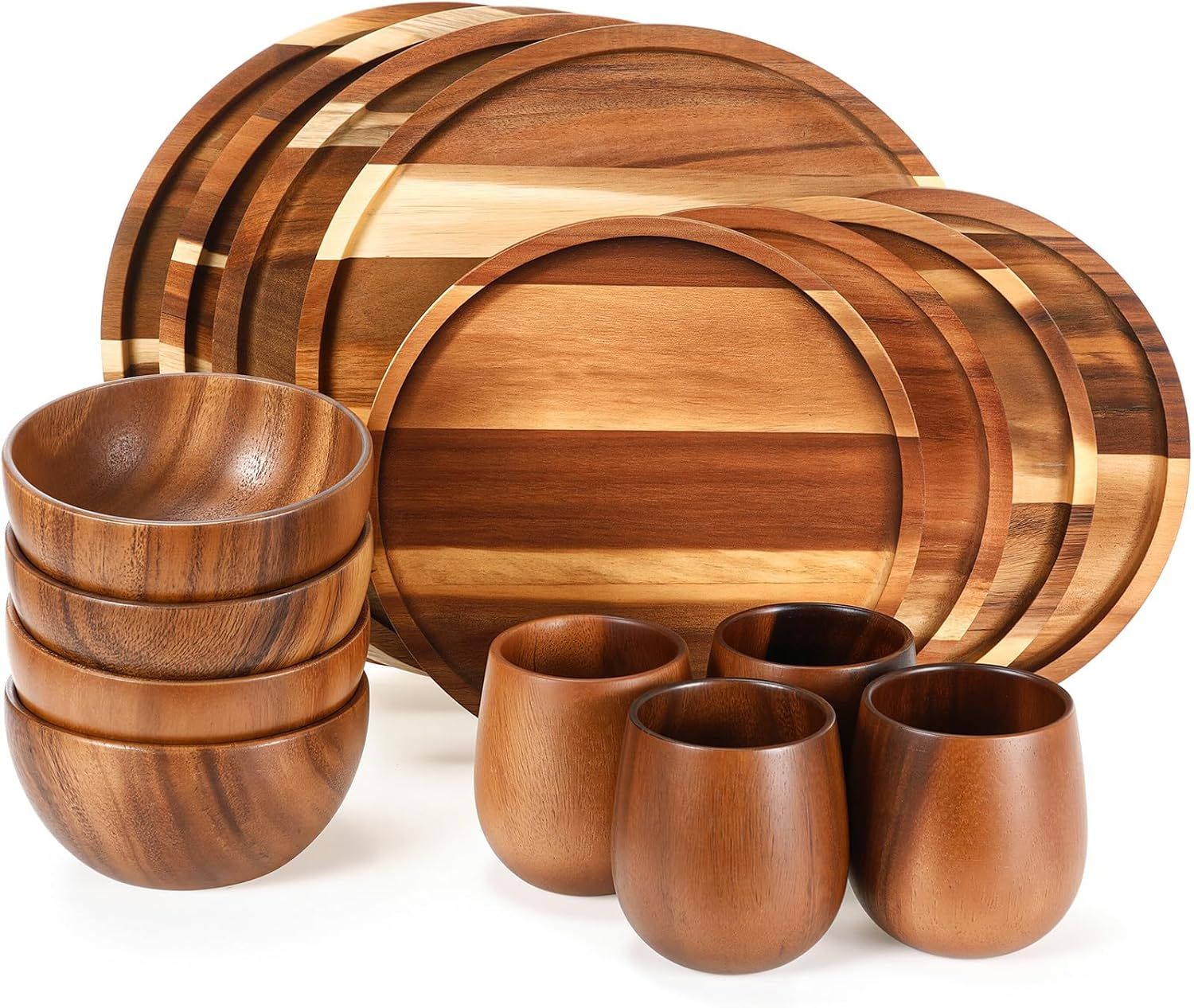
A wooden dinnerware set usually includes plates, bowls, cups, serving boards, or matching utensils made from acacia, rubberwood, beech, bamboo, or mixed wooden materials. For wholesale projects, buyers may order a fixed tableware set, a private label gift set, or a mixed SKU kitchen and dining collection.
This type of product is suitable for importers, wholesalers, home goods brands, restaurant supply distributors, hotel purchasing teams, Amazon sellers, and retail chain buyers. The most common sourcing mistake is treating wooden dinnerware like ceramic or plastic tableware. Wood has grain, moisture movement, natural color variation, and different finishing behavior. Those details need to be controlled in the RFQ and sample stage.

Material Choices: Acacia, Bamboo, Beech, and Mixed Wood
Material selection affects price, appearance, weight, finish, and customer expectations. Acacia is popular for wooden plates and bowls because it has strong grain contrast and a warm color. Bamboo is often used where buyers want a lighter material story and stable laminated construction. Beech can support simpler shapes and a cleaner pale color. Mixed wood construction can be useful for serving boards, but the buyer should confirm whether the color contrast is intentional or only a result of available raw material.
For a wooden products manufacturer China project, importers should ask the supplier to define the material in writing. "Wooden plate" is too vague. A better RFQ says: acacia wood bowl, natural oil finish, smooth rounded rim, target diameter, target thickness, logo method, inner carton, and export carton requirement. This reduces misunderstanding before sampling.
Factory Process for Wooden Plates and Bowls
The production flow usually starts with incoming wood inspection. Boards or blanks are checked for obvious cracks, unstable knots, heavy color difference, and moisture condition. For tableware, the factory also needs to consider whether the part will be turned, CNC cut, glued, pressed, sanded, or assembled.
After shaping, sanding is one of the most important steps. Buyers often complain when a wooden bowl feels rough at the rim, when a plate edge has small fibers, or when the inside curve is not evenly finished. A good wooden kitchenware supplier should define sanding stages, edge rounding, surface oiling, and final hand-feel checks. For cups and bowls, the inside surface needs extra attention because buyers notice odor, roughness, and uneven coating quickly.
Food-Contact Finish and Odor Control
For wooden dinnerware, finish should be discussed before price comparison. Buyers should confirm whether the product uses food-grade oil, wax oil, lacquer, or another surface treatment. Do not assume one report covers every SKU, color, and finish. If the target market requires specific food-contact testing, confirm it by project before bulk production.
Odor is another practical point. New wooden products can carry a natural wood or oil smell, but strong chemical odor is a warning sign. Before approving a sample, open the packaging, smell the product after it sits inside the box, and wipe the surface with a clean cloth. This simple check often reveals finish or drying problems before they become a container-level issue.
OEM and Private Label Options
EcoWoodPlate can discuss OEM and ODM options for size, shape, material, surface finish, logo position, color tone, set combination, paper sleeve, color box, hang tag, barcode label, insert card, and export carton marks. For private label wooden products, the logo method should be tested on the actual material. Laser engraving can look sharp on one wood but lighter on another. Printed logos and metal badges also need adhesion and position checks.
For wooden dinnerware sets, packaging is part of the product. Buyers planning custom size, logo, finish, or retail packaging can review EcoWoodPlate OEM/ODM service details before preparing the RFQ. A retail gift box may need a molded pulp tray, paper divider, kraft sleeve, or protective corner. E-commerce sellers should ask for a drop-resistant carton plan and avoid loose movement inside the box. Retail buyers should confirm barcode placement, warning text, care instructions, and whether the set can pass shelf handling without scratches.
Samples, MOQ, and Bulk Order Consistency
MOQ depends on material, set structure, packaging, logo method, and whether the buyer uses an existing mold or asks for a new size. Instead of asking only "What is your MOQ?", send the expected set details and ask which parts are stock-based and which parts need custom production. This gives a more useful answer.
For sample approval, keep one signed or photographed reference sample. Buyers can also compare this process with our custom wooden products sample approval guide. Confirm dimensions, weight range, wood color tolerance, surface feel, logo size, logo position, packaging layout, and carton method. During bulk production, compare random pieces against the approved sample. This is especially important for wooden plates and bowls because natural grain will vary, but the acceptable range should still be clear.
Quality Control Points Importers Should Check
| Checkpoint | What to Confirm | Why It Matters |
|---|---|---|
| Material | Wood species, grain range, color tolerance | Prevents mixed expectations across samples and bulk goods |
| Moisture | Stable drying and storage before finishing; see our moisture control guide for more detail | Reduces cracking, warping, and mold risk |
| Surface | Sanding smoothness, rim feel, coating evenness | Directly affects customer reviews and return risk |
| Logo | Method, size, depth, position, contrast | Keeps private label orders consistent |
| Packaging | Inner protection, retail box, export carton | Reduces scratches and shipping damage |

Packaging and Shipping Advice
Wooden dinnerware can be scratched or dented if pieces move inside the carton. Plates should be separated with paper, foam sheet, molded pulp, or another agreed divider. Bowls and cups need rim protection. If the set is sold online, the retail box should be tested inside an outer carton rather than shipped as the only protection.
Export cartons should match the set weight and shipping route. For large orders, ask for carton dimensions, gross weight, carton marks, packing list format, and photos of the packed goods before shipment. For Amazon or e-commerce programs, barcode labels and FBA carton labels should be confirmed before packing starts.
Buyer Procurement Checklist
- Define wood species, set components, size, and target market.
- Confirm food-contact finish and testing needs by project.
- Ask for sample photos showing rim, surface, base, and logo position.
- Approve a physical sample or detailed pre-production sample record.
- Set tolerance for color, grain, diameter, thickness, and weight.
- Confirm logo method on the same material used for mass production.
- Review retail packaging, care label, barcode, and export carton plan.
- Request pre-shipment inspection photos or third-party inspection if needed.
FAQ
How do I source wooden dinnerware sets from China?
Start with a clear RFQ: material, set components, size, finish, logo, packaging, quantity, and destination market. Then confirm a sample before bulk production.
How can I verify a Chinese wooden products manufacturer?
Check whether the supplier can discuss material, process, sample control, packaging, and inspection details. A real factory should answer production questions, not only send catalog photos.
Can wooden dinnerware sets be private labeled?
Yes. Logo engraving, printed sleeves, retail boxes, insert cards, barcode labels, and carton marks can usually be customized after sample confirmation.
What should importers check before a bulk order?
Check material, moisture stability, surface finish, odor, logo accuracy, packaging strength, carton marks, and sample-to-bulk consistency.
What packaging is suitable for export?
Use inner separation for plates, rim protection for bowls and cups, a retail box if needed, and a stronger export carton sized for the product weight and shipping route.
Working With EcoWoodPlate
If you are comparing suppliers for wooden dinnerware set wholesale, EcoWoodPlate can review your target set, material preference, logo file, packaging idea, and order plan. You can also review our factory capability, related wooden dinnerware set product page, and cutting board and utensil set reference before sending an inquiry. Cao County Puchuang Wood Industry Co., Ltd. can help importers and private label buyers turn a wooden plates and bowls concept into a practical OEM project through ecowoodplate.com. Send the product size, quantity range, market, and packaging reference through the contact page, and our factory team will reply with the details needed for sampling and quotation.
Need Factory Direct OEM/ODM Pricing?
Send your product, quantity, logo, packaging and destination country. Our factory team will reply with quotation guidance.
Request Factory Quote