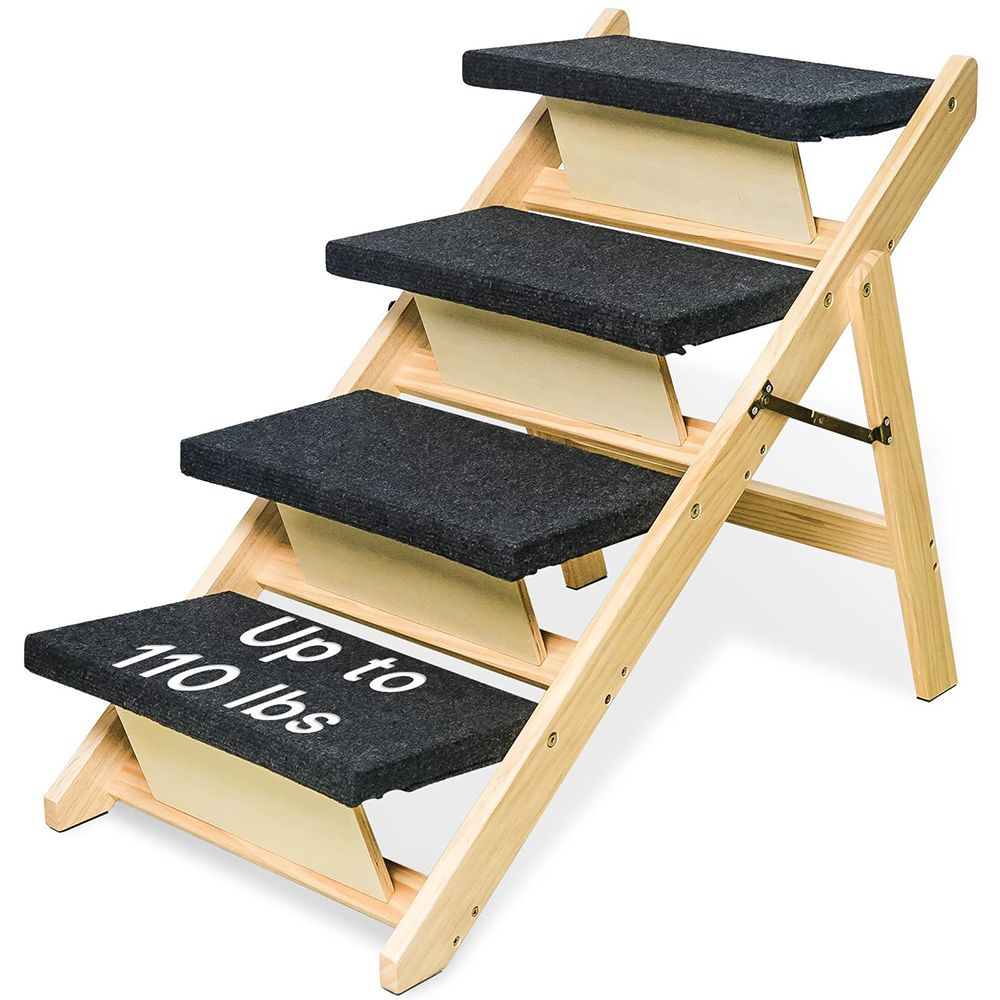
Folding wooden pet stairs wholesale programs serve dogs or cats that need access to beds, sofas and other raised surfaces without making a full jump. For a buyer, the product must do more than look stable in a catalog photo. Step rise, tread depth, carpet grip, frame geometry and folding hardware all affect whether an animal will use it—and whether the product stays steady on a hard floor.
This category suits pet-product importers, distributors, specialist retailers, e-commerce sellers, senior-pet brands and private label buyers. EcoWoodPlate, operated by Cao County Puchuang Wood Industry Co., Ltd., supplies wooden pet products through ecowoodplate.com. Buyers assessing a Chinese wooden products manufacturer should look for controlled dimensions, working samples and testable inspection points—not just a polished product image.
Define the pet and furniture before asking for a quote
“Four-step dog stairs” is not a complete specification. A buyer should state the target furniture height, the intended pet size and whether the product is mainly for beds, sofas or occasional travel. The top step should meet the target surface closely enough that the pet does not face one final oversized jump.
Pet owners repeatedly raise three practical issues: stairs that stop below the bed, treads that feel slippery and frames that move on hardwood. Senior-pet buyers also compare shallow steps with low-angle ramps according to mobility and available floor space.
For an RFQ, give the factory these numbers:
- target furniture height;
- total stair height and open footprint;
- clear tread width and usable tread depth;
- vertical rise between steps;
- folded dimensions;
- target pet-weight range;
- required floor surface and indoor-use conditions.
Those measurements help a wooden pet stairs manufacturer evaluate geometry instead of simply scaling a reference photo.
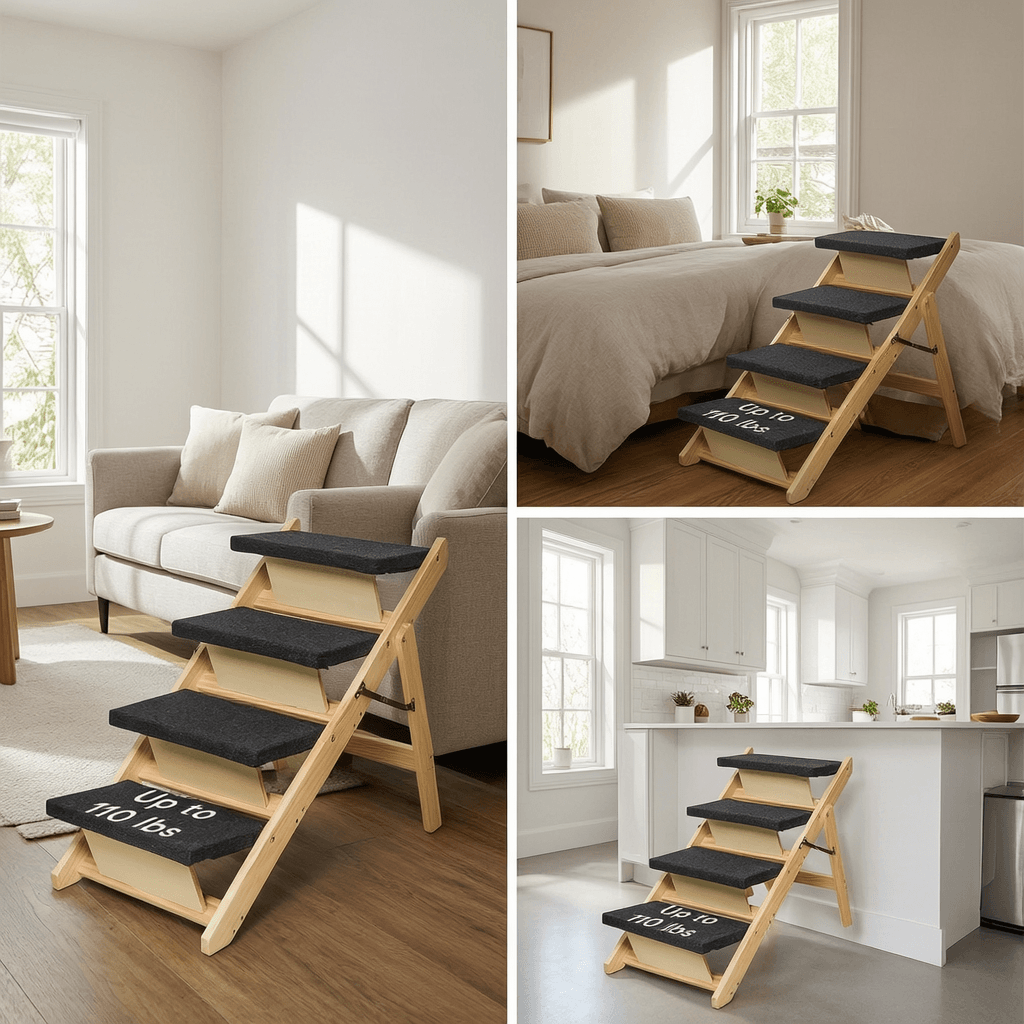
Buyers should match total height, step rise and footprint to the furniture and pet size targeted by the retail program.
Material selection: frame, tread and hardware work together
Solid wood gives the product a furniture-like appearance and provides good screw-holding when the section sizes and joints are appropriate. Plywood can be useful for tread panels or hidden supports because it offers predictable panel strength. The carpet or textured tread adds traction, but its adhesive, edge finish and cleanability require separate approval.
| Component | Common option | What the buyer should check |
|---|---|---|
| Side frame | Pine, rubberwood or other solid wood | Moisture, knots, section size, smooth edges and finish |
| Tread panel | Solid wood or plywood | Flatness, flex, edge sealing and fastener position |
| Grip surface | Carpet, felt or rubber | Abrasion, odor, adhesion, cleaning and edge lift |
| Pivot and brace | Steel hardware | Hole position, fastener depth, corrosion finish and play |
| Floor contact | Rubber pad or shaped wood foot | Sliding, rocking and marking on hard floors |
“Wood plus carpet” is too broad for repeat production. Record the frame material, tread construction, grip layer, fixing method, coating and hardware finish in the approved sample. Moisture checks also matter because movement after assembly can make the stair rock or alter pivot alignment; the moisture-control guide provides a useful starting checklist.
Stairs or ramp: choose by use case, not appearance
Stairs use separate horizontal treads, so they can reach furniture with a shorter footprint. A ramp uses a continuous incline and normally needs more floor length for a gentler approach. Some pets prefer distinct steps; others hesitate at a steep rise and respond better to a ramp with reliable traction.
Retail buyers should avoid presenting either format as universally suitable for every senior or injured pet. The product page should state dimensions and intended use clearly, while medical or rehabilitation claims require appropriate substantiation.
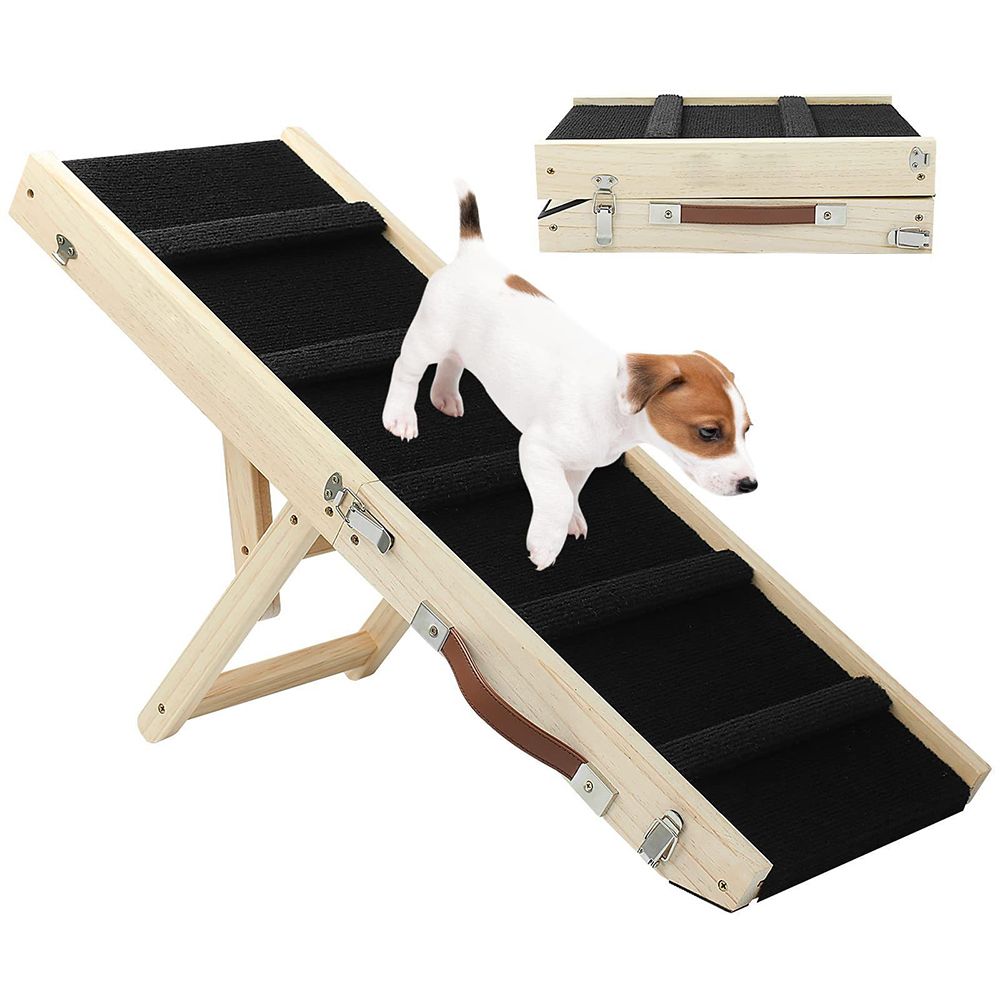
A ramp uses continuous incline and traction cleats, while stairs use separate treads and risers; buyers should choose by use case rather than appearance.
How folding wooden pet stairs are produced
Production starts with material inspection, followed by cutting the rails, treads and supports. Jigs locate pivot, brace and fastener holes; exposed corners are rounded and sanded. Before coating, a dry assembly checks flat floor contact, repeatable opening angle and brace engagement. The finished frame is then assembled with approved hardware.
Carpet is template-cut so its margins remain consistent. Inspect for adhesive squeeze-out, loose fibers and lifted corners, then pull the tread edge to test the bond. Logo work follows an approved position drawing. Final inspection covers dimensions, fastener depth, pivot movement, brace engagement, tread adhesion and the folded state.
OEM and private label options
A custom wooden products factory can adjust height, step count, tread width, wood tone, carpet color, handle, logo, labels and packaging. Buyers should identify which components remain common across the order and record them in the OEM/ODM brief.
For example, an illustrative buyer specification might request 600 units: 300 in a three-step version and 300 in a four-step version, both using the same natural finish, black tread material and one retail carton design. The buyer might set a ±2 mm tolerance on critical drilled-hole positions and require the open frame to sit without rocking on a flat inspection table. These figures are planning examples, not EcoWoodPlate standard specifications.
For multiple versions, create one bill of materials and artwork sheet per SKU. Use a revision code and record logo size, edge distance, application method and approved contrast.
A real EcoWoodPlate catalog case—and the questions it raises
EcoWoodPlate publicly lists a Wooden Pet Staircase with Carpeted Steps as SKU pet013. The product page states solid wood plus carpet, a listed MOQ of 200 pieces and a regular production lead time of 15–20 days, subject to the confirmed specification and order quantity. Logo, size, finish and packaging customization can be quoted by project.
Another EcoWoodPlate catalog image shows a four-step folding wooden unit carrying the printed statement “Up to 110 lbs.” A buyer should treat that as a capacity claim to verify, not as a substitute for a test method. Ask how the load is applied, how long it is held, whether the test covers the center and front edge of every tread, and what safety factor or permanent-deflection limit the buyer requires.
MOQ also needs clarification. Does 200 pieces apply to one height and one carpet color, or can it be divided between two versions? Does the 15–20-day period start after deposit, physical-sample approval or printed-carton approval? These questions turn public catalog numbers into a usable production plan.
Representative buyer–factory dialogue
The conversation below is a composite planning example, not a customer testimonial.
Elena, purchasing manager: “Our first order is 600 pieces for beds between 22 and 26 inches high. Can we split the order between three-step and four-step versions?”
Leo, factory merchandiser: “We need the two open heights, tread dimensions and carton style before confirming a mixed MOQ. Keeping the wood finish and carpet common will help.”
Elena: “Please quote one physical sample of each version. The sample report must show open and folded dimensions, a rocking check on a flat surface, tread adhesion and the agreed load-test method.”
Leo: “We will add those points to the approval sheet and use the signed revision for bulk production.”
The dialogue works because neither party treats the product photo as the specification.
Samples and MOQ: approve the working product
A rendering can confirm color and logo position, but only a physical sample can demonstrate stability. Open and fold it repeatedly, place it on tile and wood, and test it beside furniture at the intended height. Inspect moving-member gaps, seated fasteners and brace security. Define the cycle count and load method with the buyer’s quality team, then follow a documented sample-approval process. Approve every structural version; a sample should not represent a different frame length or hole pattern.
Bulk quality-control checklist
- Confirm wood species, panel construction and moisture condition.
- Measure open height, footprint, tread width, tread depth and step rise.
- Check drilled-hole and pivot positions against the approved drawing.
- Place the opened unit on a flat surface and check for rocking.
- Verify brace engagement and folding movement.
- Inspect all edges, corners and handle areas for splinters or sharp points.
- Check fastener depth and look for protruding screw tips.
- Rub and pull carpet edges to check adhesion and loose fibers.
- Perform the buyer-approved center, edge and duration load tests.
- Compare logo, finish, labels and carton marks with the signed sample.
For a bulk order, sample-to-mass consistency depends on measurable criteria. “Stable,” “strong” and “smooth” should be translated into a flatness check, a defined load procedure and an edge-quality reference.
Packaging and export protection
Confirm folded thickness and latch position before designing the box. Immobilize moving parts and protect rail ends, pivots and tread corners with a fitted paper insert, molded pulp, foam or corrugated partitions. Separate dark carpet from light finished wood if fiber transfer is possible.
For e-commerce, test the complete retail pack. Record carton dimensions, weight, units per master carton, barcode position and opening orientation. Instructions must match the exact model, especially when a supplier handles both stairs and ramps; the export packaging guide provides a broader carton-review framework.
Buyer RFQ checklist
- Target pet size and intended use
- Furniture height and available floor space
- Step count, rise, tread depth and clear width
- Open and folded dimensions
- Wood, tread and hardware specification
- Finish, color and odor requirements
- Load-test method and acceptance criteria
- Logo artwork and revision code
- Quantity per model and color
- Sample and golden-sample plan
- Labels, warnings and instruction sheet
- Retail carton and master-carton requirements
- Destination, trade term and target delivery date
FAQ
How should buyers choose the height of pet stairs?
Measure the bed or sofa and avoid a large final jump. Review total height, step rise and tread depth together.
What makes folding wooden pet stairs stable?
A balanced footprint, secure brace, accurate pivots, flat feet and suitable floor contact all matter. Check the sample and bulk goods.
Are carpeted treads better than bare wood?
Carpet adds traction, but test abrasion, odor, cleaning, fiber shedding and edge adhesion. The complete stair must also resist floor sliding.
Should a private label range use stairs or a ramp?
Stairs use less floor length; ramps provide continuous support but need a suitable incline. Offer the format that matches the target pet, furniture height and customer space rather than treating one design as universal.
For a folding wooden pet stairs wholesale project, EcoWoodPlate and Cao County Puchuang Wood Industry Co., Ltd. can review drawings, quantities, branding and packaging. Send the target furniture height, pet range, model mix and destination through the EcoWoodPlate inquiry page so the OEM wooden products supplier can identify which details require physical sampling before a bulk order.
Need Factory Direct OEM/ODM Pricing?
Send your product, quantity, logo, packaging and destination country. Our factory team will reply with quotation guidance.
Request Factory Quote